
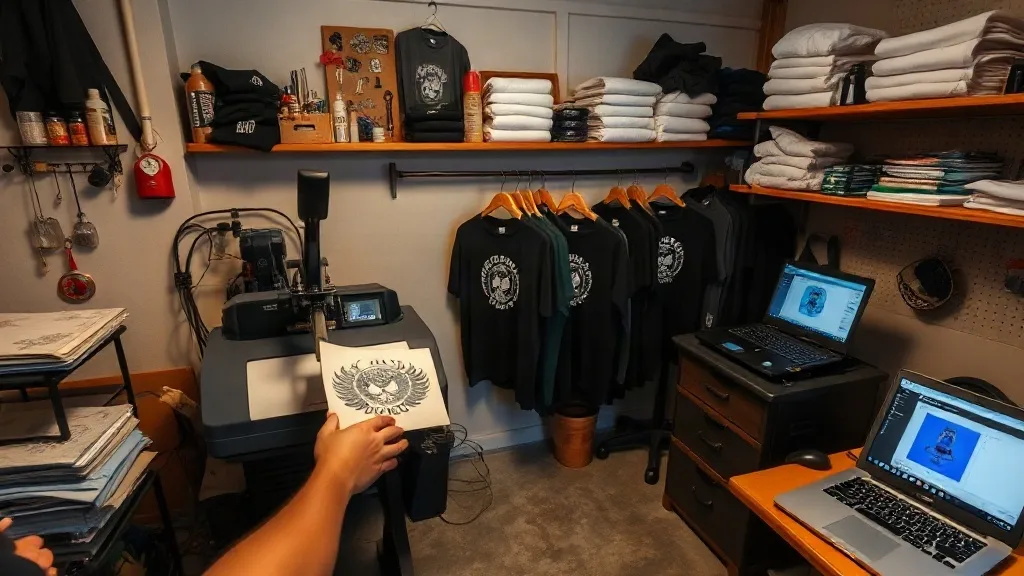
You started printing dtf transfers in your garage because you needed extra cash. Maybe a friend asked for a custom tee, then their cousin wanted a hoodie, and suddenly you were buying a heat press and a small printer. The leap from weekend orders to a full-time operation is exciting, but it is also where many small shops stall. The difference between a side hustle and a real business is not just more orders; it is systems, pricing, and the ability to say no to bad jobs. This guide is for the shop owner who is ready to stop treating dtf printing as a hobby and start running it like a company.
The Numbers That Matter Before You Quit Your Day Job
Before you hand in your notice, you need to know your true cost per transfer. That includes the film, the powder, the ink, the printer depreciation, the electricity, and your time. Many beginners only count the film and powder, then wonder why they are not making money. Sit down with a spreadsheet and calculate the cost of a single 12x16 inch sheet. Then add your labor: how many sheets can you print, powder, and cure in an hour? If you can produce 20 sheets per hour and each sells for $5, that is $100 per hour gross, but after materials and overhead you might be netting $40. That is still decent, but it is not enough to replace a full-time income unless you can scale.
The next step is to figure out your break-even point. Add up your fixed monthly costs: rent (if you have a space), internet, software subscriptions, insurance, and loan payments. Divide that by your average profit per transfer. If your fixed costs are $1,500 per month and you make $3 profit per transfer, you need to sell 500 transfers just to cover overhead. That is about 17 transfers per day, every day. Knowing this number will tell you whether you can afford to quit your job or whether you need to grow the side hustle first.
Equipment Upgrades That Actually Pay for Themselves
When you are printing a few orders a week, a basic printer and a handheld heat press are fine. But as volume grows, you will hit bottlenecks. The first upgrade that usually pays off is a larger format printer. A 24-inch printer lets you print gang sheets with multiple designs, which cuts down on film waste and setup time. The second is a pneumatic heat press. If you are pressing dozens of shirts a day, a manual press will wear out your shoulder and lead to inconsistent pressure. A pneumatic press gives you repeatable results and faster cycle times.
Do not overlook the small stuff: a good powder shaker, a curing oven or a heat gun with a consistent temperature, and a quality cutter. These items are not glamorous, but they reduce errors and reprints, which directly affect your bottom line. Before you buy anything, calculate the payback period. If a $3,000 printer saves you 10 hours a week and you value your time at $20 per hour, that is $200 per week, so the printer pays for itself in 15 weeks. If the numbers do not work, wait.
Pricing for Profit, Not for Popularity
One of the biggest mistakes side hustlers make is underpricing to win jobs. It feels good to get orders, but if you are not making a profit, you are just busy, not successful. Your pricing should cover materials, labor, overhead, and a profit margin. A common formula is to multiply your material cost by three to five times, but that is just a starting point. You also need to factor in the complexity of the design, the number of colors, and the turnaround time. Rush jobs should cost more, not the same.
It is also important to set a minimum order value. If someone wants a single shirt, the setup time and film waste might make it unprofitable. Set a minimum of $25 or $30 per order, or charge a small-order fee. This encourages larger orders and weeds out customers who are not serious. When you quote a price, be confident. If a customer balks, explain the value: you use high-quality dtf transfers that survive dozens of washes, and you stand behind your work. The right customers will pay for quality.
Building a Customer Base That Comes Back
Getting a new customer costs time and money, so your goal should be to turn every first-time buyer into a repeat buyer. The easiest way is to deliver a product that exceeds expectations. That means checking every transfer for flaws before it ships, using consistent colors, and packaging it so it arrives undamaged. Include a small care card with washing instructions; it shows you care and reduces complaints.
After the sale, follow up. A simple email or text asking how the transfers worked out can open the door to a reorder. Offer a loyalty discount for repeat customers, like 10% off their next order. And make it easy to reorder: keep their design files on hand so they can just say "send me another batch." Many print shops use a simple CRM or even a spreadsheet to track customer preferences and order history. When you know that a customer always orders left-chest logos on black tees, you can proactively reach out when you have a sale on black blanks.
Marketing on a Shoestring Budget
You do not need a big ad budget to get the word out. Start with your existing customers: ask them for referrals and offer a discount for each new customer they bring in. Local businesses are also great targets. Schools, sports teams, gyms, and restaurants all need custom apparel. Put together a simple one-page flyer with your best work and a clear price list, and drop it off in person. A handshake and a sample go a long way.
Social media is your friend. Post photos of your transfers in action: a time-lapse of a shirt being pressed, a close-up of a crisp design, a satisfied customer holding their order. Use hashtags like #dtftransfers and #customapparel to reach a wider audience. If you have a website, make sure it is easy to find when someone searches for dtf transfers near me. Include your city and service area in your page titles and content. And encourage happy customers to leave reviews on Google and Facebook; reviews are social proof that can bring in a steady stream of new business.
Scaling Without Burning Out
As orders increase, you will need to delegate. The first hire is usually a part-time helper to handle pressing and packing. This frees you up to focus on sales and customer service. Write down your processes so that anyone can follow them: how to load the printer, how to powder and cure, how to press different fabrics. A simple checklist can prevent costly mistakes.
Consider outsourcing non-core tasks like graphic design or bookkeeping. You do not need to be good at everything. Focus on what you do best and hire out the rest. And do not forget to set boundaries. It is easy to work 12-hour days when you are passionate, but burnout will kill your business. Schedule regular days off and stick to them. Your customers will respect you more for it.
Common Questions from Aspiring Shop Owners
How much money do I need to start a DTF printing business?
You can start with as little as $2,000 to $3,000 if you buy a used printer and a basic heat press. However, if you want to scale quickly, plan for $8,000 to $15,000 for a decent setup including a larger printer, a pneumatic press, and a curing oven. Remember to budget for supplies and marketing.
What is the most profitable type of DTF order?
Large orders with multiple items, such as team uniforms or company event shirts, tend to be the most profitable because the setup time is spread across many pieces. Small single-item orders are less profitable unless you charge a minimum order fee.
How do I find reliable blanks suppliers?
Look for suppliers that offer consistent quality and fast shipping. Order samples from a few different companies and test them with your transfers. Check for fabric content, weight, and how well they hold up after washing. Building a relationship with a supplier can also get you better pricing on bulk orders.
Can I run a DTF business from home?
Yes, many successful DTF businesses start in a garage or spare room. You will need good ventilation for the powder and curing process, and enough space for your equipment. Check your local zoning laws to make sure home-based businesses are allowed.
How do I compete with larger print shops?
Compete on service, not price. Offer faster turnaround, personalized customer care, and high-quality work. Large shops often have minimums and rigid processes; you can be flexible and build personal relationships. Many customers are willing to pay a little more for someone who answers the phone and cares about their order.