
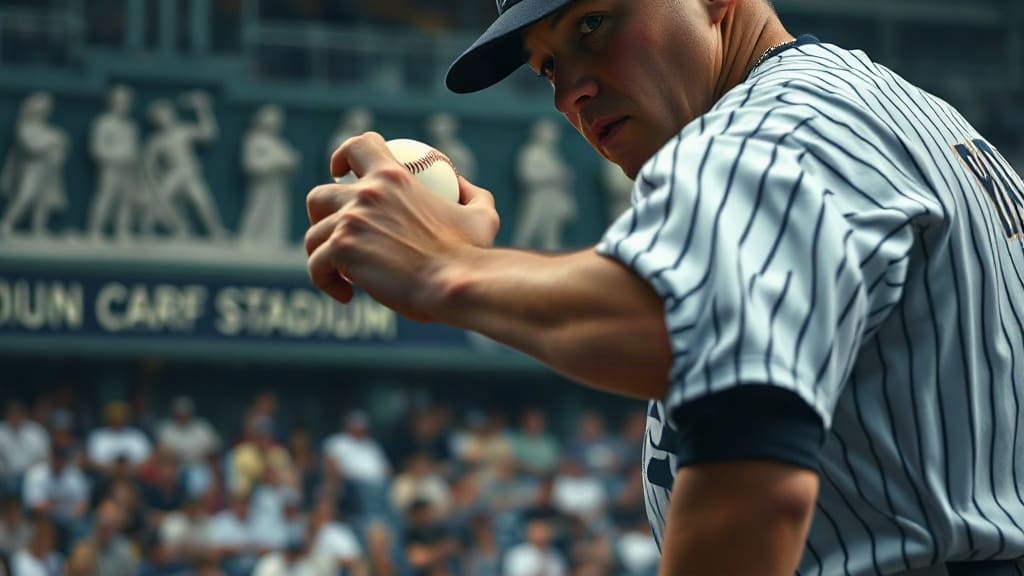
The New York Yankees' blockbuster signing of left-hander Max Fried was meant to solidify a rotation that has often been plagued by injuries. But barely into spring training, a familiar worry has resurfaced: Fried's elbow. The $218 million ace, who has a notable history of elbow problems, recently experienced a setback that has the organization and fans holding their breath. The question isn't just about his immediate availability; it's about the long-term viability of a franchise cornerstone.
What Exactly Happened?
During a routine bullpen session, Fried felt what has been described as "discomfort" in his throwing elbow. The team immediately shut him down and sent him for imaging. While initial reports suggest no structural damage, the Yankees are proceeding with an abundance of caution. Fried himself downplayed the issue, calling it "normal spring training soreness," but the team's medical staff is not taking any chances. An MRI revealed mild inflammation, and he has been prescribed rest and anti-inflammatory medication. The plan is to reevaluate in a week, but any delay in his ramp-up could impact his readiness for Opening Day.
A History of Elbow Troubles
This isn't uncharted territory for Fried. In 2023, he missed significant time with a left forearm strain, which is often a precursor to more serious elbow issues. He also had Tommy John surgery early in his career, back in 2014 when he was in the San Diego Padres' system. That procedure, while common, adds a layer of complexity to any future elbow concerns. The Yankees were well aware of this history when they signed him to an eight-year, $218 million contract this offseason. They believed the risk was manageable, but this latest scare underscores just how fragile pitching health can be.
Why This Matters for the Yankees
The Yankees' rotation was already a question mark heading into the season. With Gerrit Cole returning from his own elbow issues and Carlos Rodón looking to bounce back, Fried was expected to be a stabilizing force. His ability to induce ground balls and limit hard contact made him an ideal fit for Yankee Stadium's short porch in right field. Losing him for any extended period would put immense pressure on the rest of the staff and could force the team to dip into its thin starting pitching depth. The front office has been reluctant to trade top prospects, but a serious injury to Fried could change that calculus.
Financial Implications
From a business perspective, the Yankees have a massive investment in Fried. His $27.25 million average annual value is among the highest for a pitcher in MLB history. If he misses significant time, the team will still be on the hook for his salary, and insurance policies typically only cover a fraction of lost value. Moreover, the Yankees' luxury tax payroll is already over the highest threshold, meaning any additional spending to replace Fried would come with a hefty tax penalty. This is not just a baseball problem; it's a financial one.
The Depth Chart Reality
Behind Fried, the Yankees have a mix of veterans and unproven arms. Clarke Schmidt showed promise last year but has never thrown more than 150 innings in a season. Luis Gil, the reigning AL Rookie of the Year, is still building up his workload. Marcus Stroman is a solid innings eater but lacks the upside of Fried. If Fried is out for any length of time, the Yankees might have to rely on young pitchers like Will Warren or Chase Hampton, both of whom have limited major league experience. That's a risky proposition for a team with World Series aspirations.
What the Experts Are Saying
Former players and analysts have weighed in on Fried's situation. Many point to the fact that elbow discomfort in spring training is not uncommon, but given Fried's history, it warrants extra caution. "You can't ignore the red flags," said one former All-Star pitcher who has dealt with his own elbow issues. "Even if the MRI is clean, the fact that he felt something is concerning. The Yankees need to be smart here. It's a long season." Another analyst noted that Fried's delivery, which relies heavily on a high arm slot and sharp breaking balls, puts extra stress on the elbow. "He's not a guy who can just dial it back and be effective. He needs that sharp curveball, and that's what gets him in trouble."
The Road Ahead
For now, the Yankees are taking a wait-and-see approach. Fried will rest for a week and then be reevaluated. If the inflammation subsides, he could resume throwing and still have time to build up for the regular season. However, if the discomfort persists, the team may opt for a more conservative approach, possibly shutting him down for a longer period. The worst-case scenario, of course, is a tear that requires surgery. That would be a devastating blow, not just for this season but for the entire length of the contract.
Managing Expectations
Fans and media alike are anxious for updates, but the Yankees have been tight-lipped. Manager Aaron Boone has repeatedly said the team is "not overly concerned" but also "not going to rush anything." That's the right approach, but it does little to quell the anxiety. The Yankees have a history of downplaying injuries, only to have them become more serious. In 2023, they initially described Rodón's forearm issue as "minor," and he ended up missing most of the season. The hope is that this is different, but skepticism is warranted.
What This Means for Fantasy Baseball and Betting Markets
Beyond the real-world implications, Fried's injury has sent ripples through fantasy baseball and sports betting markets. His average draft position has dropped significantly in the past week, and sportsbooks have adjusted the Yankees' win total odds slightly. While these shifts are often overreactions, they reflect genuine uncertainty. For fantasy managers, Fried was being drafted as a top-20 starting pitcher; now he's falling into the 30s and 40s. That could be a value opportunity if he returns healthy, but it's a gamble.
Historical Precedents
Looking at similar situations can provide some context. Pitchers who experience elbow discomfort in spring training often miss time but can return to form. For example, Justin Verlander had a lat strain in 2015 and missed two months, but he came back strong. On the other hand, some pitchers never fully recover from even minor elbow issues, especially if they have a history of problems. Fried's case is particularly tricky because he's already had Tommy John surgery. A second surgery would be far more complicated and could end his career. The Yankees are surely aware of this and will do everything possible to avoid that outcome.
Fan and Media Reaction
Social media has been abuzz with reactions, ranging from panic to cautious optimism. Some fans are already calling the signing a mistake, while others point out that it's too early to judge. The New York media, known for its intensity, has been relatively measured so far, but that could change if the news worsens. The pressure on Fried to perform in New York was already immense; this injury only adds to it. He's a quiet, reserved personality, which might help him handle the scrutiny, but the constant questions about his health will be a challenge.
The Bigger Picture
Ultimately, this situation is a reminder of how fragile pitching can be. Teams invest hundreds of millions of dollars in arms, hoping they can stay healthy, but the reality is that injuries are inevitable. The Yankees have been burned before, and they'll likely be burned again. The key is how they manage this particular situation. Rushing Fried back could lead to a more serious injury, while being overly cautious could cost them games early in the season. It's a delicate balance, and the next few weeks will be telling.
Frequently Asked Questions
Is Max Fried's elbow injury serious?
As of now, the Yankees are calling it mild inflammation with no structural damage. However, given Fried's history of elbow issues, the team is being cautious. He will be reevaluated after a week of rest. The true severity won't be known until he resumes throwing.
Could Max Fried need Tommy John surgery again?
It's possible but not currently indicated. The MRI showed no ligament damage, which is a positive sign. However, if the inflammation persists or worsens, further testing might reveal a more serious problem. A second Tommy John surgery is rare but not unheard of.
How will this affect the Yankees' rotation if Fried misses time?
If Fried is out for an extended period, the Yankees would likely turn to Clarke Schmidt and Luis Gil to fill the void, with Marcus Stroman also playing a bigger role. They might also explore trade options, but their depth is limited. The rotation would be noticeably weaker without Fried.
What is Max Fried's contract with the Yankees?
Fried signed an eight-year, $218 million contract with the Yankees in December 2024. It includes a full no-trade clause and an opt-out after the 2029 season. The average annual value is $27.25 million.
When is Max Fried expected to return?
There is no official timetable. If all goes well, he could resume throwing in a week and still be ready for Opening Day. However, the Yankees may choose to slow his progression, which could push his debut back a few weeks. A lot depends on how his elbow responds to rest.