
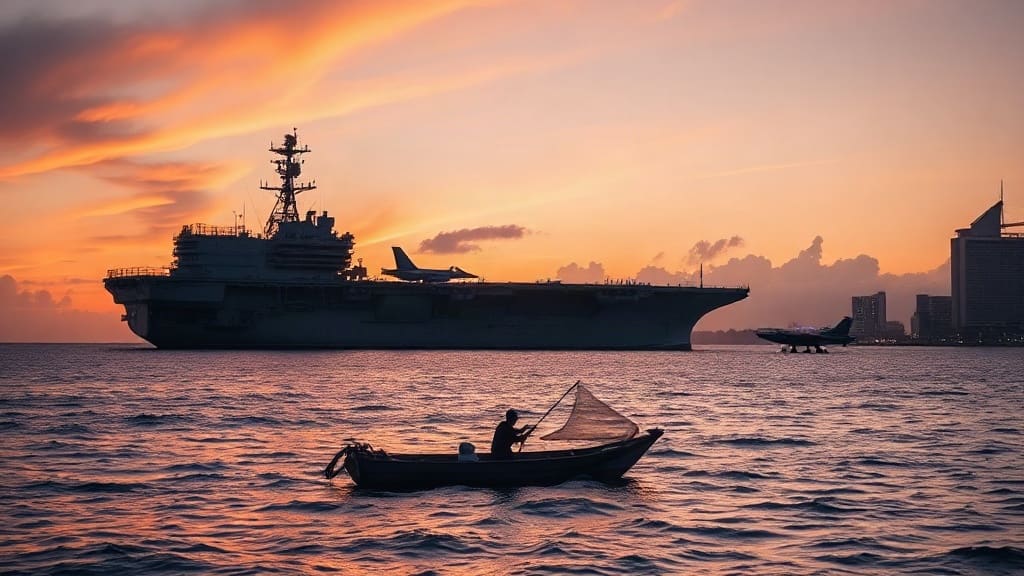
When the USS Abraham Lincoln finally pulled into the waters near Pattaya, Thailand, the crew had been at sea for 250 days. That is not a typo. Two hundred and fifty days without setting foot on solid ground, without a home-cooked meal, without the simple comfort of a quiet night away from the hum of engines and the endless blue of the ocean. It is a record that no sailor ever really wants to break, and as the carrier dropped anchor off the coast of this neon-lit resort town, the moment was equal parts relief and reflection.
The Abraham Lincoln's deployment was extended multiple times due to shifting operational demands in the Indo-Pacific. What was supposed to be a standard seven-month cruise turned into a marathon of more than eight months. For the thousands of sailors on board, the extra weeks were not just a scheduling inconvenience. They were a test of mental and physical endurance, a slow grind that pushed many to their limits and forced the Navy to confront hard questions about how long a crew can remain effective without a port call.
Why Pattaya? The Logistics and Allure of a Port Call
Pattaya might seem like an unusual choice for a U.S. Navy port visit. The city, located on Thailand's eastern Gulf coast, is famous for its nightlife, its go-go bars, and its reputation as a playground for tourists. It is not a major naval hub like Singapore or Yokosuka. But for a crew that has been cooped up on a floating airfield for the better part of a year, Pattaya offers something that few other places can: a complete and immediate release from the pressures of shipboard life.
For the sailors, the port call is a chance to sleep in a real bed, eat food that is not prepared in a galley, and simply walk down a street without hearing the constant announcements over the ship's intercom. It is a psychological reset button, and few places hit that button harder than Pattaya. The city's tourism infrastructure is built to handle large influxes of visitors, and its entertainment options are legendary. But beyond the bars and the beaches, there is a deeper reason the Navy chose this port. Thailand is a long-standing ally in the region, and port visits like this one serve as a subtle reminder of the U.S. military's presence and commitment to freedom of navigation in the South China Sea.
The Abraham Lincoln's arrival is not just about rest and relaxation. It is a strategic signal. The carrier strike group has spent months operating in the Western Pacific, conducting exercises with allies and keeping a watchful eye on China's growing naval assertiveness. Docking in Thailand, even for a few days of liberty, sends a message that the U.S. Navy is not going anywhere. And for the sailors, it is a tangible reward for a deployment that many quietly describe as the hardest of their careers.
The Human Cost of 250 Days at Sea
Naval deployments have always been demanding, but the modern era has introduced a new level of strain. The Abraham Lincoln's 250-day deployment is not just a number; it is a symptom of a fleet that is being asked to do more with less. The U.S. Navy has been shrinking for years, even as its global commitments have expanded. The result is that ships and their crews are spending longer periods away from home, with fewer breaks in between.
For the sailors on the Lincoln, the extended deployment meant missed birthdays, missed anniversaries, and missed first steps. It meant watching from a screen as children grew up and parents aged. It meant the slow erosion of morale that comes from endless days of the same routine, the same faces, and the same four walls of a steel cabin. The Navy has programs to help sailors cope, but no amount of counseling or morale-boosting events can replace the simple act of going home.
One sailor, who asked not to be named because he was not authorized to speak to the media, described the mood on board in the final weeks before the port call as "electric but fragile." Everyone was counting down the days, he said, but there was also an undercurrent of exhaustion that made even small tasks feel monumental. The arrival in Pattaya was not just a break; it was a lifeline.
The record-setting deployment also raises questions about the Navy's personnel policies. How long can a crew be expected to remain combat-ready without a significant rest period? At what point does the risk of burnout outweigh the operational benefits of keeping a carrier on station? These are not academic questions. They are the kind of questions that admirals and policymakers will be debating long after the Abraham Lincoln has returned to its homeport in San Diego.
The Strategic Context: A Carrier in the Indo-Pacific
The Abraham Lincoln's extended deployment is part of a broader U.S. strategy to maintain a persistent presence in the Indo-Pacific region. The carrier strike group's movements are closely watched by China, which has been rapidly expanding its own naval capabilities. Every time a U.S. carrier transits the South China Sea or conducts exercises with allies like Japan, Australia, and the Philippines, it is a statement of intent.
But presence comes at a cost. The Navy's carrier fleet is aging, and the demand for carrier strike groups far exceeds the supply. The Abraham Lincoln is one of 11 carriers in the U.S. fleet, but at any given time, only a handful are available for deployment. The rest are in maintenance, training, or in various stages of the deployment cycle. This means that the carriers that do deploy are often asked to stay out longer than planned, as happened with the Lincoln.
The result is a dangerous cycle. Longer deployments lead to lower morale, which can lead to higher rates of mental health issues, disciplinary problems, and even suicide. The Navy has been grappling with a suicide crisis for years, and extended deployments are widely seen as a contributing factor. The Abraham Lincoln's record-setting cruise is a stark reminder that the human element of naval power cannot be ignored.
Pattaya's Role in the Sailor's Psyche
For the sailors stepping off the ship and into the humid air of Pattaya, the city represents something that is hard to put into words. It is not just a place to party; it is a place to feel human again. The simple act of walking down a street, buying a cold drink from a vendor, and sitting on a beach without a watchful eye is a luxury that most people take for granted. For a sailor who has spent 250 days under the constant supervision of officers and the relentless routine of shipboard life, that freedom is intoxicating.
Pattaya's reputation as a party town is well-earned, and many sailors will undoubtedly take full advantage of the city's nightlife. But there is more to the port call than bars and clubs. The city's temples, its markets, and its quiet side streets offer a different kind of escape. Some sailors will spend their liberty days exploring the Sanctuary of Truth, a massive wooden temple that is a testament to Thai craftsmanship. Others will head to the nearby islands for a day of snorkeling and relaxation. And some will simply find a quiet hotel room and sleep for 12 hours straight.
The Navy has strict rules about behavior during port calls, and the sailors are briefed extensively before they are allowed to go ashore. The goal is to ensure that the crew enjoys their liberty without causing incidents that could strain relations with the host country. For the most part, the sailors are well-behaved, but the sheer number of young men and women descending on a city known for its excesses is always a source of concern for local authorities and Navy leadership alike.
What Happens Next for the Abraham Lincoln?
After the port call in Pattaya, the Abraham Lincoln will eventually head back across the Pacific to its homeport in San Diego. But the deployment is not over yet. The carrier still has to transit the Pacific, a journey of several weeks, before the crew can finally set foot on American soil. The homecoming will be emotional, but it will also be complicated. The sailors who have been at sea for 250 days will return to a world that has moved on without them. Relationships will need to be rebuilt, routines re-established, and in some cases, the transition will be harder than the deployment itself.
The Navy has learned from past experiences that the post-deployment period is a critical time for sailors' mental health. The service has expanded its support programs, offering counseling and resources to help sailors readjust to life at home. But the challenge remains immense. A sailor who has been in a high-stress environment for eight months cannot simply flip a switch and become a civilian again. The transition takes time, and it requires patience from families and communities.
The Abraham Lincoln's record-setting deployment will likely be studied for years to come. It is a case study in the limits of human endurance and the costs of maintaining a global naval presence. It is also a reminder of the sacrifices that sailors and their families make every day, often without recognition. The next time you see a news story about a carrier strike group in the South China Sea, remember the people on those ships. They are not just statistics; they are human beings who have given up months of their lives to serve their country.
Frequently Asked Questions
How long was the USS Abraham Lincoln at sea before arriving in Pattaya?
The USS Abraham Lincoln's crew was at sea for 250 days before arriving near Pattaya, Thailand. This is a record for a U.S. Navy carrier deployment in recent history and reflects the increasing demands placed on the fleet in the Indo-Pacific region.
Why do U.S. Navy ships make port calls in places like Pattaya?
Port calls serve multiple purposes. They provide sailors with a much-needed break from the rigors of shipboard life, which helps maintain morale and mental health. They also serve as diplomatic gestures, strengthening ties with allied nations and demonstrating the U.S. Navy's presence in strategically important regions.
What are the effects of extended deployments on sailors' mental health?
Extended deployments can lead to increased stress, anxiety, depression, and burnout among sailors. The Navy has implemented various support programs, but the long-term effects are still a major concern. The record-setting deployment of the Abraham Lincoln has reignited discussions about how to balance operational demands with the well-being of service members.
Is Pattaya a safe destination for U.S. Navy sailors?
Pattaya is generally considered safe for tourists, including U.S. Navy sailors, as long as they follow local laws and Navy regulations. The Navy provides extensive briefings before port calls, and sailors are expected to adhere to a code of conduct. Incidents are rare, but the large number of visitors can sometimes lead to minor issues.
What is the strategic significance of the USS Abraham Lincoln's deployment?
The Abraham Lincoln's deployment is part of the U.S. Navy's ongoing effort to maintain a persistent presence in the Indo-Pacific, particularly in response to China's growing naval activities. The carrier strike group's operations, including its port call in Thailand, are intended to reassure allies and deter potential adversaries.