
Initial market reactions to the diplomatic resolution
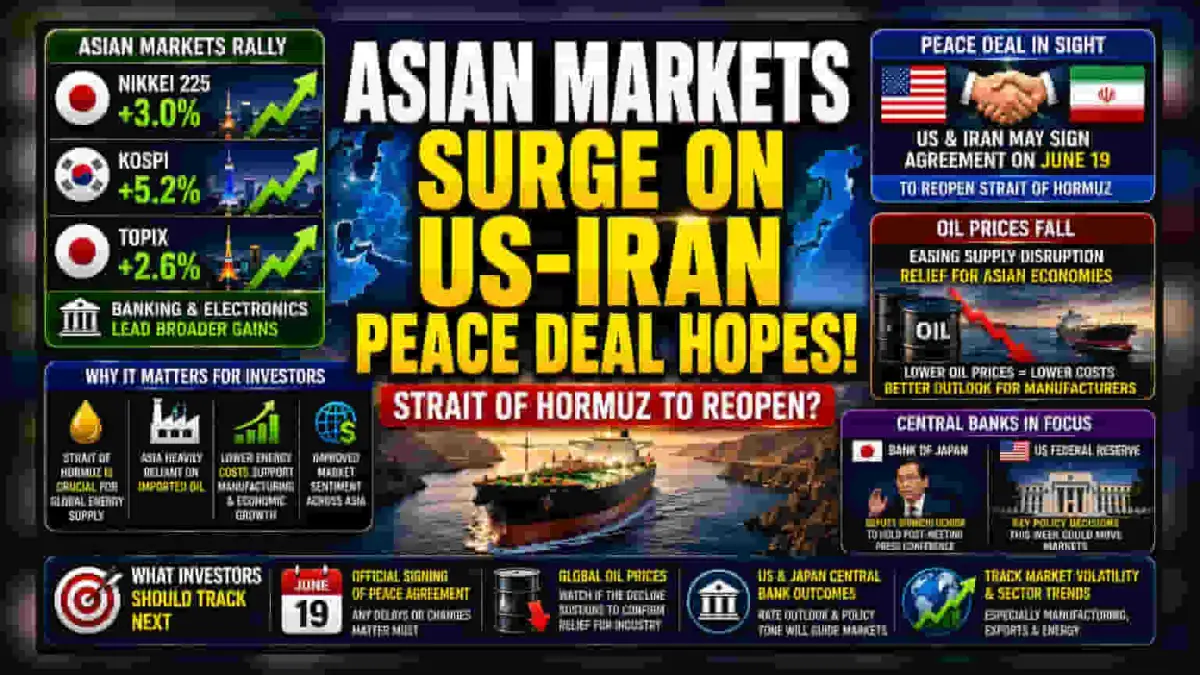
The recent confirmation of the US-Iran peace deal triggered a massive wave of optimism across Eastern financial hubs. As soon as the diplomatic agreement was finalized, major Asian stock exchanges recorded immense gains during their early trading sessions. Investors enthusiastically celebrated the abrupt end to months of severe geopolitical uncertainty that restricted regional capital flow. Leading financial indices in Tokyo, Shanghai, and Mumbai saw their numbers skyrocket as institutional traders rapidly adjusted their protected portfolios. The successful signing of the US-Iran peace deal effectively removed a massive dark cloud hanging over the international trade landscape. This sudden normalization revived investor confidence, paving the way for a historic financial recovery across emerging markets.Technology and manufacturing sectors lead the surge
Among the biggest winners of this diplomatic breakthrough are the massive technology and manufacturing sectors deeply rooted in Asia. During the conflict, the constant threat of supply chain interruptions caused severe production delays and significantly inflated operational costs. Now, companies anticipate a rapid return to normal, predictable manufacturing schedules, highly benefiting their long-term corporate revenue forecasts. Semiconductor producers and automotive giants heavily depend on consistent, uninterrupted material deliveries from international partners. With the geopolitical landscape stabilizing, these critical industries can safely execute their lucrative expansion strategies without fearing sudden logistical nightmares. Consequently, technology stocks dominated the trading floors, leading the explosive market rally immediately following the ceasefire confirmation.Energy price stabilization calms nervous investors
A massive factor driving the current Asian market rally is the sudden, highly welcome stabilization of global energy prices. For months, the ongoing conflict severely threatened massive crude oil supplies, forcing energy-dependent Asian economies to endure crippling inflation. The US-Iran peace deal successfully neutralized this terrifying threat, causing petroleum prices to experience a significant, immediate downward correction. Lower, predictable energy costs act as a massive economic stimulant for countries relying heavily on imported fossil fuels. Manufacturing overhead will decrease, allowing consumer goods to be produced much cheaper and directly combating regional inflationary pressures. This highly favorable energy landscape provides Asian central banks with necessary breathing room to adjust their complex monetary policies.Reopening shipping lanes boosts global trade hopes
A crucial cornerstone of the comprehensive diplomatic resolution is the immediate reopening of critical Middle Eastern shipping corridors. The US-Iran peace deal guarantees the safe, toll-free passage of commercial vessels through the heavily contested Strait of Hormuz. Asian exporters rely heavily on this exact maritime chokepoint to safely deliver their highly valuable goods to Western consumer markets. During the hostilities, massive cargo ships were forced into long, incredibly expensive detours, causing terrible logistical bottlenecks across global ports. Reestablishing this vital route significantly reduces costly marine insurance premiums and successfully cuts international delivery times in half. The rapid resumption of efficient maritime transit is a massive victory for the booming Asian export industry.Currency markets react to newfound regional stability
Beyond the bustling stock exchanges, international currency markets are also experiencing major, highly positive shifts due to the diplomatic resolution. As the perceived global risk drastically decreases, investors are bravely moving their capital away from traditional safe-haven assets. Consequently, emerging Asian currencies are currently enjoying a strong, highly encouraging rally against the globally dominant US dollar. A stronger local currency heavily benefits Asian importers by making foreign goods and essential raw materials much cheaper to acquire. The US-Iran peace deal essentially provides an incredible financial buffer for developing nations struggling with severe national debt obligations. This highly favorable exchange rate environment is expected to massively stimulate domestic consumption and heavily boost regional economic growth.Long-term economic outlook for Asian economies
While the immediate market reaction is undeniably spectacular, financial analysts are closely evaluating the long-term macroeconomic implications of this treaty. If the involved nations strictly adhere to the finalized framework, the US-Iran peace deal could easily trigger a prolonged economic golden age. Sustainable, enduring peace is absolutely essential for attracting massive foreign direct investments into rapidly developing Asian infrastructure projects. However, cautious optimism remains the primary sentiment among veteran financial experts monitoring the highly complex geopolitical landscape. They strongly advise regional governments to actively diversify their global supply chains to effectively withstand any potential future diplomatic shocks. Ultimately, this historic ceasefire provides Asian economies with a brilliant, unprecedented opportunity to solidify their dominant position in global trade.Conclusion
In summary, the historic confirmation of the US-Iran peace deal has successfully sparked a massive, unprecedented rally across Asian stock markets. By rapidly stabilizing highly volatile energy prices and fully reopening critical international shipping lanes, the agreement heavily restores global economic confidence. Moving forward, this vital diplomatic resolution provides a spectacular foundation for enduring financial prosperity and massive industrial growth throughout the Asian continent.Frequently Asked Questions
Question 1: What caused the massive rally in Asian stock markets?
The rally was directly triggered by the historic confirmation of the US-Iran peace deal, which successfully eliminated major geopolitical risks and stabilized the global economy.
Question 2: How does the diplomatic agreement affect energy prices?
The treaty heavily stabilizes volatile global energy markets, causing crude oil prices to quickly drop and providing massive financial relief to energy-dependent Asian countries.
Question 3: Why are the reopened shipping lanes so important?
Reopening these vital corridors drastically lowers expensive transit costs, completely resolves severe logistical bottlenecks, and allows Asian exports to reach Western markets much faster.
Question 4: Which specific market sectors saw the biggest financial gains?
Technology companies and massive manufacturing corporations experienced the highest financial gains, heavily benefiting from restored, highly predictable international supply chains.
Question 5: Will this economic growth in Asia last long-term?
Long-term economic stability is highly likely if the US-Iran peace deal holds, but analysts strongly recommend that nations still actively diversify their trade networks against future risks.