
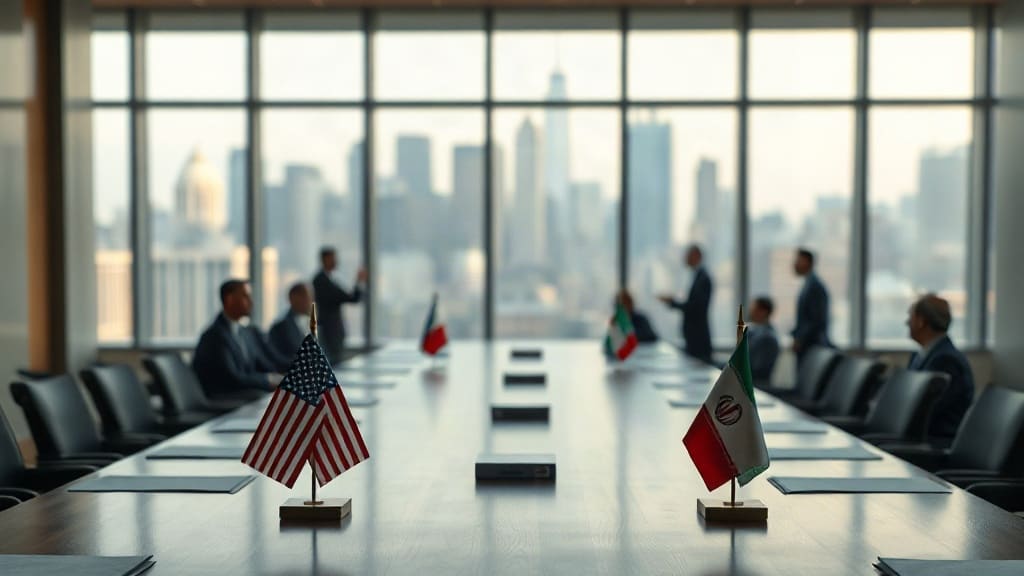
On the margins of the United Nations General Assembly, U.S. and Iranian delegations sat down for their first direct talks since June. The meeting, confirmed by officials on both sides, marks a cautious rekindling of diplomacy after months of escalating rhetoric. Yet the backdrop could hardly be more contradictory: President Donald Trump has publicly threatened to "annihilate" the Iranian regime if it poses a threat to the United States. That combination of talks and threats has left observers wondering whether this is a genuine opening or merely a tactical pause.
Why These Talks Matter
Direct engagement between Washington and Tehran has been rare since the U.S. withdrew from the Iran nuclear deal in 2018. The June talks, which reportedly focused on regional security and nuclear issues, ended without a breakthrough. This latest meeting, held on the sidelines of the U.N. General Assembly, is the first since then. It signals that both sides still see value in talking, even as they trade barbs. For Iran, the talks offer a chance to ease economic pressure and avoid further isolation. For the U.S., they provide a channel to address concerns about Iran's nuclear program and regional activities without immediately resorting to force.
The Trump Factor: Threats and Talks
President Trump's threat to "annihilate" Iran is not new. He has used similarly harsh language before, especially after Iran shot down a U.S. drone in 2019. But the timing is notable. Just days before the talks, Trump repeated his warning, saying that any attack on American interests would be met with overwhelming force. That kind of rhetoric might seem to undermine diplomacy, but it can also serve as leverage. By keeping the military option on the table, the administration may be trying to push Iran toward concessions. Alternatively, the talks could be a way to manage a crisis while maintaining a tough public stance.
What Was on the Table?
Details of the meeting remain sparse. Officials described the discussions as "frank" and "constructive," but offered no specifics. Based on past negotiations, likely topics included:
- Iran's nuclear program, including enrichment levels and inspections.
- Regional security, particularly in the Persian Gulf and Strait of Hormuz.
- The presence of Iranian-backed militias in Iraq, Syria, and Yemen.
- Potential prisoner exchanges or humanitarian gestures.
None of these issues are easy to resolve. The nuclear file alone has been stalled for years. But the fact that both sides are talking suggests a shared interest in avoiding a full-blown conflict.
Background: A Relationship in Freefall
The U.S.-Iran relationship has been deteriorating for decades. The 1979 revolution and subsequent hostage crisis severed ties. More recently, the 2015 nuclear deal (JCPOA) briefly opened a diplomatic window, but Trump's withdrawal in 2018 and the subsequent "maximum pressure" campaign of sanctions pushed Iran to ramp up its nuclear activities. In 2020, the U.S. killing of Iranian General Qasem Soleimani brought the two countries to the brink of war. Since then, indirect talks in Vienna have tried to revive the nuclear deal, but without success. The June talks were the first direct encounter in years, and now this latest meeting continues that fragile thread.
What Iran Wants
Iran's economy is reeling from sanctions. Its currency has plummeted, and inflation is rampant. The government likely seeks relief from these pressures. It also wants security guarantees and an end to what it calls U.S. "economic terrorism." On the nuclear front, Iran insists its program is peaceful, but it has enriched uranium to levels far beyond what the deal allows. By talking, Iran may hope to divide the U.S. from its European allies, who still support the nuclear deal. It may also be buying time to advance its nuclear capabilities.
What the U.S. Wants
The Trump administration has two main goals: prevent Iran from obtaining a nuclear weapon and curb its regional influence. It also wants to free Americans detained in Iran. But the president's approach has been unpredictable. He has said he is open to a new deal, but only if it covers not just nuclear issues but also Iran's missile program and support for proxies. That is a tall order. The talks may be a way to test Iranian willingness to go beyond the JCPOA.
Regional Reactions
U.S. allies in the region are watching closely. Israel, which considers Iran its greatest threat, has warned against any deal that leaves Iran's nuclear infrastructure intact. Saudi Arabia and the UAE, while wary of Iran, have recently sought to de-escalate tensions. They may welcome talks if they reduce the risk of war. Russia and China, both closer to Iran, have called for diplomacy. The talks could thus have ripple effects across the Middle East, potentially easing or exacerbating existing conflicts.
Possible Outcomes
What can we realistically expect? Here are a few scenarios:
- Continued talks: Both sides agree to meet again, perhaps in a third country, and gradually build confidence. This could lead to limited agreements, such as prisoner swaps or small sanctions relief.
- Stalemate: The talks collapse over irreconcilable demands, and both sides return to their corners. Tensions rise again, and the threat of military action grows.
- Breakthrough: A comprehensive deal is reached, but this is highly unlikely given the deep mistrust and complex issues.
Most analysts bet on the first scenario: a slow, cautious process with no immediate breakthroughs. The key is whether both sides can maintain the diplomatic channel despite provocations.
Why This Matters to You
Even if you are not directly involved in foreign policy, the U.S.-Iran standoff affects global oil prices, regional stability, and the risk of war. A conflict in the Persian Gulf could disrupt oil supplies, raising prices at the pump. It could also draw the U.S. into another Middle Eastern war, with all the human and financial costs that entail. Diplomacy, even flawed, is preferable to the alternative. So these talks, however tentative, are worth paying attention to.
Frequently Asked Questions
What did the U.S. and Iran discuss in their first talks since June?
Officials have not released a detailed agenda, but the talks likely covered Iran's nuclear program, regional security, and potential prisoner exchanges. Both sides described the meeting as a chance to air differences.
Why did Trump threaten to annihilate Iran while talks were happening?
Trump's threat was likely a show of strength, intended to pressure Iran into making concessions. It also reassures allies that the U.S. remains tough on Iran. The administration may be pursuing a dual-track approach of diplomacy and deterrence.
Will these talks lead to a new nuclear deal?
That is unlikely in the short term. The U.S. wants a broader agreement that includes Iran's missile program and regional activities, while Iran wants sanctions relief first. Deep mistrust and complex technical issues make a quick deal improbable.
How does this affect the Middle East?
If talks progress, they could reduce tensions in the Gulf and open the door to broader regional dialogue. If they fail, the risk of conflict increases, with potential disruptions to oil supplies and security.
What role do other countries play?
European powers, Russia, and China have all urged restraint and diplomacy. They could facilitate future talks or offer incentives to both sides. Regional players like Israel and Saudi Arabia will also influence the process through their own security concerns.