
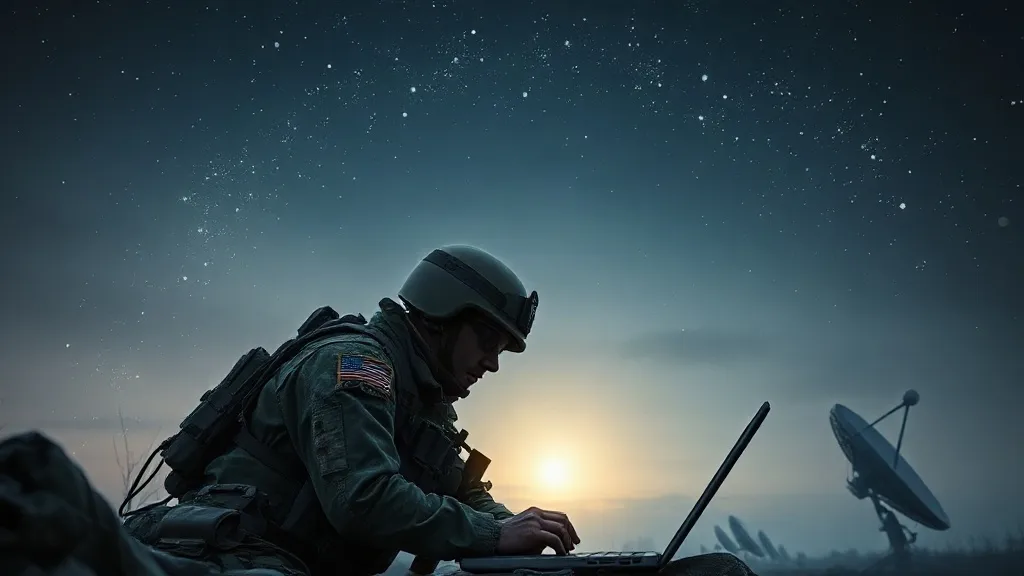
The war in Ukraine has become a testing ground for technologies that were never designed for combat. Among them, Starlink, Elon Musk's satellite internet constellation, has emerged as both a lifeline and a liability. As Musk's political statements and business decisions increasingly intersect with the conflict, Ukraine's military is quietly adapting to fight without the service that once defined its tactical communications. This shift reveals hard truths about the role of private companies in modern warfare and the fragility of depending on commercial infrastructure in a war zone.
The Rise of Starlink on the Battlefield
When Russia launched its full-scale invasion in February 2022, Ukraine's communications infrastructure was an immediate target. Traditional networks crumbled under cyberattacks and physical destruction. Starlink terminals, rushed into the country by Musk himself, filled the void. Within weeks, Ukrainian forces were using the system to coordinate artillery strikes, share drone footage, and maintain command links across vast front lines. The technology's low Earth orbit satellites provided connectivity that was resilient to jamming and destruction on the ground.
For a time, Starlink was hailed as a game-changer. Its ability to function amid blackouts and in remote areas made it indispensable. But the relationship between Ukraine and Musk was never purely altruistic. The billionaire's company, SpaceX, had commercial interests, and Musk's personal politics began to surface in ways that unsettled Kyiv.
Musk's Political Gambit
In recent months, Musk has made headlines not for technological breakthroughs but for his political commentary. He has proposed peace plans that would cede territory to Russia, questioned Ukraine's ability to win, and suggested that Starlink services might be restricted unless the U.S. government paid for them. These statements, often delivered via his own platform X, have raised alarms in Kyiv and among Western allies. The fear is that Musk could unilaterally disable Starlink in areas critical to Ukraine's operations, as he reportedly did during a Ukrainian drone attack on Crimea in 2022.
While Musk later denied that he had deliberately thwarted the attack, the incident cast a long shadow. It highlighted a uncomfortable reality: a single private individual, not elected by anyone, could influence the course of a war. The reliance on Starlink had become a vulnerability, one that Ukraine's military planners could no longer ignore.
Learning to Fight Without Starlink
Ukraine's response has been pragmatic. Military units have begun diversifying their communication tools, testing alternatives from other satellite providers and improving their own encrypted radio networks. The goal is not to abandon Starlink entirely but to reduce dependency and ensure that a disruption would not cripple operations.
According to officials and soldiers interviewed in recent weeks, the process is challenging. Starlink's ease of use and widespread availability made it a default choice. Alternative systems, such as those from Iridium or Inmarsat, offer lower bandwidth and higher costs. Some units have resorted to traditional HF radios and even courier systems for sensitive communications. The transition requires retraining and new equipment, straining resources already stretched thin.
Yet the adaptation is underway. Ukraine's military has reportedly developed contingency plans that include pre-positioning alternative terminals and designating Starlink-free zones for certain operations. This pragmatic approach reflects a broader realization: in a war fought with commercial tech, resilience means not putting all eggs in one satellite basket.
The Broader Implications for Modern Warfare
Ukraine's experience offers a cautionary tale for militaries worldwide. The integration of commercial technologies like satellite internet, drones, and AI has transformed warfare, but it also introduces new risks. Private companies, driven by profit and the whims of their leaders, can become unexpected gatekeepers. The U.S. Department of Defense has taken note, increasing its own investments in satellite communications and exploring ways to ensure commercial providers cannot arbitrarily cut off access.
For Ukraine, the lesson is particularly acute. The country has become a laboratory for 21st-century conflict, and its ability to innovate under pressure is remarkable. But the Starlink saga underscores that technology alone cannot guarantee security. Political will and diversified supply chains are just as critical.
What Comes Next?
As the war grinds on, Ukraine will continue to rely on Starlink for many tasks, but the era of blind trust is over. The military is likely to accelerate its search for homegrown or allied alternatives, including partnerships with European satellite firms. Meanwhile, Musk's role remains a wild card. His companies have contracts with the U.S. government, and pressure from Washington could constrain his actions. But the episode has already changed the calculus.
In the end, Ukraine's ability to fight without Starlink is a testament to its adaptability. It also serves as a warning: in the age of billionaire space barons, the battlefield extends into the boardroom and the Twitter feed. Militaries must prepare for that reality, or risk being outmaneuvered by forces beyond their control.
Frequently Asked Questions
Why is Ukraine trying to reduce its reliance on Starlink?
Ukraine is reducing reliance on Starlink due to concerns that Elon Musk could restrict or disable service based on his political views or business interests. The move is a precaution to ensure communication resilience in case of disruption.
What alternatives are available to Starlink for military communications?
Alternatives include other satellite internet providers like Iridium and Inmarsat, though they offer lower bandwidth. Ukraine is also improving encrypted radio networks and using traditional methods like HF radios and couriers for sensitive communications.
How did Starlink become so important to Ukraine's military?
Starlink provided resilient, high-speed internet that was crucial after Russia destroyed Ukraine's communications infrastructure. Its low Earth orbit satellites were resistant to jamming and allowed coordination of artillery, drones, and command links.
What precedent does this set for other countries using commercial tech in warfare?
It highlights the risks of depending on private companies for critical military communications. Countries may seek to diversify suppliers, develop domestic alternatives, or negotiate stricter contracts to prevent arbitrary cutoffs.