
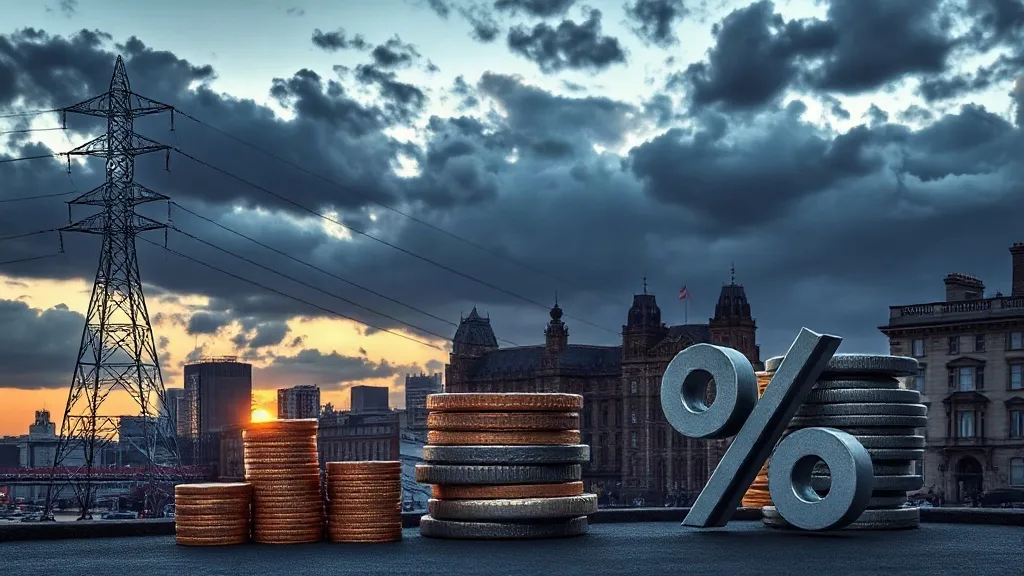
Just as the UK government puts the finishing touches to its first Budget under Prime Minister Andy Burham, the International Monetary Fund (IMF) has delivered a mixed message: the economy is expected to grow faster than previously thought in the near term, but a double whammy of higher energy prices and interest rates will dampen growth in 2027. The revised forecast, released today, paints a picture of an economy that is resilient in the short run but faces significant headwinds further out.
According to the IMF's latest World Economic Outlook, UK GDP is now projected to expand by 1.2% in 2025, up from an earlier estimate of 0.9%. The upgrade reflects stronger-than-expected consumer spending and a rebound in business investment, supported by easing inflation and a tight labour market. However, the fund warned that growth will slow to 0.8% in 2026 and just 0.5% in 2027, as energy prices are expected to climb again and the Bank of England may be forced to keep interest rates higher for longer to combat persistent inflation.
Why the Upgrade Matters
The upward revision for 2025 is welcome news for the government, which has faced criticism over its handling of the economy. A stronger growth outlook could provide a boost to tax revenues, giving the Chancellor more fiscal room in the upcoming Budget. It also signals that the UK is recovering from the twin shocks of the pandemic and the energy crisis faster than some of its European neighbours.
But the IMF's forecast is not without caveats. The fund noted that the UK's growth is still below its pre-pandemic trend and that the recovery is uneven across sectors. Manufacturing continues to struggle with supply chain disruptions, while the services sector, particularly hospitality and tourism, is benefiting from a surge in consumer demand. The labour market remains tight, with unemployment at 3.8%, but wage growth has started to moderate, which could ease inflationary pressures.
The 2027 Warning
The more troubling part of the IMF's report is the projection for 2027. By then, the fund expects energy prices to rise again, driven by geopolitical tensions and the transition to renewable energy. This will push up household bills and business costs, squeezing disposable incomes and potentially tipping the economy into a slowdown. At the same time, the Bank of England may still be battling above-target inflation, keeping interest rates elevated. Higher rates increase borrowing costs for mortgages, loans, and credit cards, further weighing on consumer spending and business investment.
"The UK economy is walking a tightrope," said a senior IMF economist, speaking on condition of anonymity. "Growth is improving now, but the medium-term outlook is clouded by structural challenges. Policymakers need to address these headwinds proactively."
The Budget Balancing Act
The IMF's forecast comes at a delicate time for Prime Minister Andy Burham, who is preparing to unveil his first Budget. The government has pledged to invest in public services, infrastructure, and the green transition, but it must also demonstrate fiscal discipline to maintain market confidence. The upgraded growth forecast gives the Chancellor some room to manoeuvre, but the projected slowdown in 2027 means any spending increases must be sustainable.
Economists suggest that the Budget should focus on measures that boost long-term productivity, such as skills training, digital infrastructure, and research and development. Short-term giveaways, like cuts to fuel duty or VAT, may provide temporary relief but could exacerbate inflation and undermine the public finances. The government is also under pressure to extend support for households struggling with energy bills, especially as the price cap is set to rise again in October.
Energy Prices: A Looming Threat
Energy prices have been a volatile factor in the UK economy since the onset of the war in Ukraine. After spiking in 2022, they retreated in 2023 and 2024, providing some relief to consumers. But the IMF expects a renewed surge in 2027, driven by increased demand from emerging economies and supply constraints. The UK's reliance on imported gas makes it particularly vulnerable. The government's plan to expand renewable energy and nuclear power could mitigate this in the long run, but the benefits will not be felt by 2027.
For households, higher energy prices mean bigger bills and less money to spend elsewhere. For businesses, they mean higher operating costs, which could lead to job cuts or price increases. The Bank of England's ability to control inflation is limited when energy prices are determined globally. This creates a dilemma: raise rates to curb inflation and risk choking off growth, or keep rates low and allow inflation to persist.
Interest Rates: The Persistent Pain
Interest rates are another headwind. The Bank of England has raised rates 14 times since December 2021, from 0.1% to 5.25%, in an effort to bring inflation back to its 2% target. Inflation has fallen from its peak of 11.1% in October 2022 to 3.4% in February 2024, but it remains above target. The IMF expects the Bank to start cutting rates in late 2024 or early 2025, but the pace of cuts may be slower than markets anticipate, especially if energy prices rise again.
Higher interest rates affect the economy through various channels. They increase the cost of mortgages, with around 1.5 million households facing a sharp rise in repayments as their fixed-rate deals expire. They also raise the cost of business loans, discouraging investment. And they strengthen the pound, making exports less competitive. The IMF's forecast assumes that rates will remain elevated through 2027, which could prolong the squeeze on households and businesses.
What It Means for You
For ordinary people, the IMF's forecast is a reminder that the cost-of-living crisis is not over. While growth is picking up, the benefits may not be felt evenly. If you are a homeowner with a mortgage, you may face higher repayments when your fixed rate ends. If you are a renter, your landlord may pass on higher costs. If you are a business owner, you may need to absorb higher energy bills or pass them on to customers. Planning ahead is crucial: consider fixing your energy tariff if you can, review your mortgage options, and build a financial buffer for unexpected costs.
For investors, the outlook suggests a period of lower returns and higher volatility. Sectors that are sensitive to interest rates, such as real estate and consumer discretionary, may underperform. Energy stocks could benefit from higher prices, but the transition to renewables presents long-term risks. Diversification and a long-term perspective are more important than ever.
Frequently Asked Questions
What is the IMF's new growth forecast for the UK?
The IMF now expects UK GDP to grow by 1.2% in 2025, up from its previous estimate of 0.9%. However, it forecasts slower growth of 0.8% in 2026 and 0.5% in 2027.
Why will energy prices rise again in 2027?
The IMF cites increased global demand, supply constraints, and geopolitical tensions as key drivers. The UK's dependence on imported gas makes it vulnerable to these price shocks.
How will higher interest rates affect the economy?
Higher rates increase borrowing costs for mortgages, loans, and credit cards, reducing consumer spending and business investment. They can also strengthen the pound, hurting exports.
What should households do to prepare?
Consider fixing your energy tariff, reviewing your mortgage, and building an emergency fund. Reducing debt and avoiding unnecessary borrowing can also help.
Will the Budget address these challenges?
The Budget is expected to include measures to support growth and ease the cost of living, but the government must balance this with fiscal discipline. Long-term investments in productivity and energy security are likely to be prioritised.