
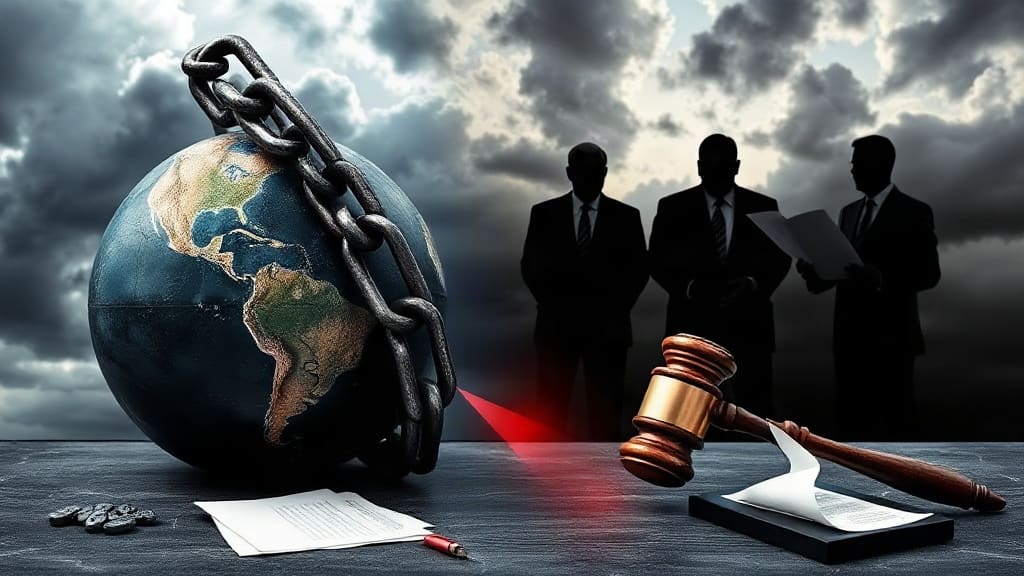
When the Trump administration imposed tariffs on steel, aluminum, and a wide range of Chinese goods, it framed them as a necessary tool to correct trade imbalances and protect American industries. But for many of America's closest allies, those tariffs felt like a betrayal. Instead of rallying behind US trade priorities, countries from Europe to Asia pushed back, retaliating with their own tariffs and deepening divisions. Even now, years later, the tariffs remain a ball and chain on global trade cooperation, hindering efforts to rebuild trust and reform the international trading system.
The Unraveling of Multilateral Trade
For decades, the United States was the chief architect of the multilateral trading system, championing the World Trade Organization (WTO) and pushing for ever-deeper integration. That consensus began to crack under President Trump, who viewed the WTO as a bad deal for America and preferred bilateral pressure over collective bargaining. The tariffs he imposed starting in 2018 were not just about economics; they were a blunt instrument of coercion. Allies like Canada, Mexico, and the European Union were stunned to find themselves in the crosshairs, forced to negotiate under threat. The result was a series of ad-hoc deals that bypassed the WTO and sowed uncertainty.
The Steel and Aluminum Tariffs: A Case Study
The steel and aluminum tariffs, introduced in March 2018 on national security grounds, epitomized the administration's approach. While the stated goal was to protect American producers, the move alienated key partners. The EU responded with tariffs on American motorcycles, bourbon, and jeans. Canada and Mexico, initially exempted, later faced tariffs and retaliated. The chaos disrupted supply chains and raised costs for US manufacturers, who struggled to source inputs. More importantly, it shattered the notion that the US would abide by the rules it had helped create.
Allies Rebel Against US Priorities
The source summary notes that the US tried to rally countries behind its trade priorities, but they rebelled. This rebellion was not confined to traditional rivals like China; it came from friends and allies. At the G7 summit in 2018, Trump clashed with other leaders over trade, leading to a tense standoff. French President Emmanuel Macron warned that the tariffs would lead to a "trade war" and called for unity. German Chancellor Angela Merkel emphasized the need for multilateral solutions. The episode highlighted a fundamental shift: the US was no longer the trusted leader of the global trading order, but a disruptor.
The Impact on Global Supply Chains
Tariffs might be paid by importers, but their effects ripple through global supply chains. Companies that had spent decades optimizing production across borders suddenly faced higher costs and uncertainty. Some shifted production to avoid tariffs, but that often meant higher prices for consumers. The WTO estimated that the trade tensions could reduce global GDP by nearly 1% by 2022. While that number may seem small, it represents hundreds of billions of dollars in lost output and countless jobs. Moreover, the tariffs accelerated a trend toward decoupling, as countries began to prioritize resilience over efficiency.
The Biden Administration: A Partial Reprieve
President Biden came into office promising a more predictable trade policy. He paused some tariffs, particularly on European steel and aluminum, and sought to rebuild alliances. Yet many Trump-era tariffs on China remain in place, and the administration has maintained a hawkish stance on trade with Beijing. The Inflation Reduction Act and the CHIPS Act, while not tariffs, double down on industrial policy and favor domestic production. Allies have welcomed the return of a more cooperative tone, but they remain wary. The underlying tensions over subsidies and market access persist, and the WTO's dispute settlement system remains paralyzed.
Europe's Strategic Autonomy
In response to US unpredictability, the European Union has embraced the concept of "strategic autonomy." This means reducing dependence on other countries for critical goods and technologies, and being more assertive in defending its interests. The EU has signed new trade deals with partners like Japan and Mercosur, and is pursuing its own carbon border tax. While these moves are not directed solely at the US, they reflect a desire to hedge against American policy swings. The tariffs may have been the catalyst, but the shift toward a more fragmented global economy was already underway.
Why the Tariffs Persist
Despite their costs, the tariffs have proven politically sticky. Many Democrats and Republicans alike see them as a necessary tool to counter China's unfair trade practices and to protect American workers. The Biden administration has kept most of the Trump tariffs on China, and even expanded some. The political consensus in Washington has shifted against free trade, with both parties favoring a more muscular approach. This makes it unlikely that the tariffs will be fully removed anytime soon, perpetuating the ball and chain on global cooperation.
The WTO's Diminished Role
The WTO, once the arbiter of global trade disputes, has been sidelined. The US blocked appointments to its Appellate Body, effectively killing its ability to issue binding rulings. Without a functioning dispute settlement system, countries have little recourse but to retaliate unilaterally. This undermines the rules-based order and encourages a might-makes-right approach. The tariffs are both a symptom and a cause of the WTO's decline.
What's Next for Global Trade?
The future of global trade cooperation hangs in the balance. The US and its allies face a choice: continue down the path of unilateralism and fragmentation, or rebuild a cooperative framework that addresses shared challenges like climate change and digital trade. The tariffs have shown that coercion can backfire, uniting allies against US priorities rather than rallying them behind. A new approach is needed, one that recognizes interdependence as a strength, not a weakness.
The Role of Trust
Trust is the invisible infrastructure of global trade. Without it, deals are harder to reach, and disputes escalate quickly. The Trump tariffs eroded that trust, and rebuilding it will take time. The Biden administration has made some progress, but the scars remain. Allies are diversifying their trading partners and building resilient supply chains, reducing their reliance on the US. This does not mean the end of US leadership, but it does mean the US must earn back its role as a reliable partner.
Frequently Asked Questions
What are the Trump tariffs and why were they imposed?
The Trump tariffs refer to a series of import taxes imposed by the Trump administration starting in 2018, primarily on steel, aluminum, and Chinese goods. They were justified on national security grounds and aimed at reducing trade deficits and protecting US industries.
How did US allies respond to the tariffs?
US allies, including the European Union, Canada, and Mexico, retaliated with tariffs on American goods such as motorcycles, bourbon, and agricultural products. They also sought to strengthen trade ties with other partners, reducing reliance on the US market.
Are the tariffs still in effect?
Many of the tariffs, especially those on Chinese goods, remain in place under the Biden administration. Some tariffs on European steel and aluminum have been paused or replaced with quotas, but the overall tariff regime persists.
What impact have the tariffs had on the global economy?
The tariffs have raised costs for businesses and consumers, disrupted supply chains, and contributed to a slowdown in global trade growth. The WTO estimated that trade tensions could reduce global GDP by nearly 1% by 2022.
What is the future of global trade cooperation?
The future is uncertain. While there are efforts to rebuild alliances and reform the WTO, the trend toward unilateralism and fragmentation continues. Cooperation will require renewed trust and a recognition of shared interests.