
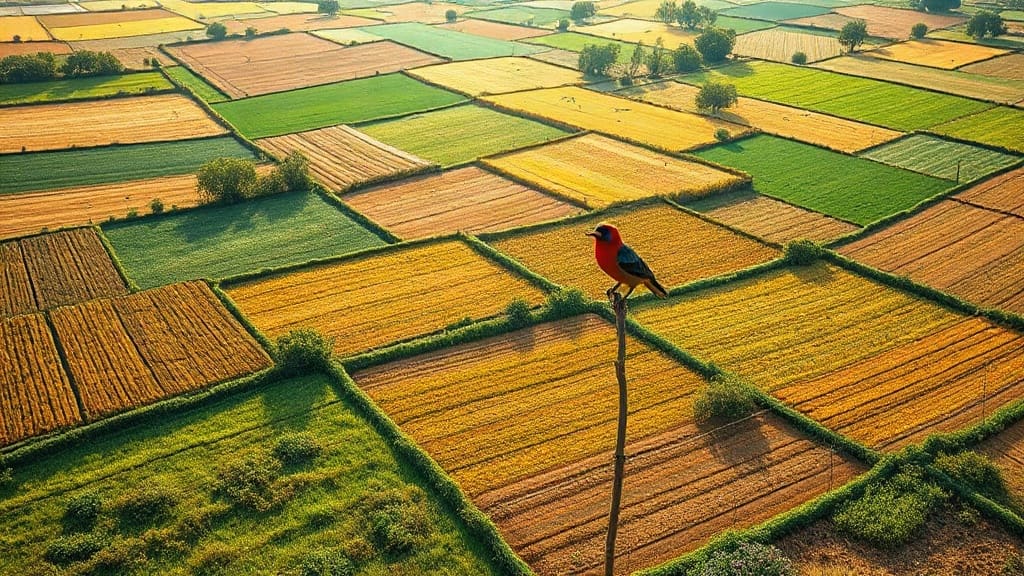
In the countryside, the sight of a red-winged blackbird perched on a fencepost or the distant call of a meadowlark is more than just a pleasant backdrop. Birds are integral to agricultural landscapes, providing services like pest control and seed dispersal. Yet their populations are declining across many regions, largely due to habitat loss and intensification of farming. Now, a new study published in the journal Landscape Ecology offers a hopeful message: by breaking up large monocultures into a patchwork of smaller, diverse crop fields, we can create better habitats for birds. This simple shift in agricultural design could have far-reaching benefits for biodiversity and the overall health of our environment.
The Science Behind the Study
Researchers analyzed bird communities across various agricultural landscapes, comparing areas with large, uniform fields to those with a mosaic of smaller fields growing different crops. The findings were clear: landscapes with a diverse patchwork supported a greater number of bird species and higher overall bird abundance. The study highlights that it's not just the total area of habitat that matters, but how it's arranged. Small fields with different crops create a variety of microhabitats, offering birds more opportunities for nesting, feeding, and shelter.
Why Small Fields Matter
Large monocultures, such as vast expanses of corn or wheat, provide little structural diversity. They may offer food during certain seasons, but they lack the varied vegetation and insect life that birds need year-round. In contrast, a patchwork of smaller fields with different crops, including legumes, oilseeds, and cereals, mimics natural ecosystems more closely. Each crop type attracts different insects and provides different cover, so birds can find resources throughout the year. For example, some birds prefer the seeds of sunflowers, while others rely on the insects found in alfalfa. By having these crops in close proximity, birds can easily move between fields as their needs change.
The Role of Field Margins
Another key factor is the presence of field margins. When fields are smaller, the proportion of edge habitat increases. These margins, often planted with grasses, wildflowers, or shrubs, are bustling with life. They support a high diversity of insects, which in turn feed birds. Margins also provide nesting sites for species like the common yellowthroat and song sparrow. In large fields, margins are limited, but in a patchwork system, they become a significant component of the landscape. The study found that bird diversity was highest when small fields were combined with well-developed margins, creating a synergistic effect.
Birds as Indicators of Environmental Health
Birds are often considered bioindicators. Their presence, absence, and overall health reflect the condition of the environment. When bird communities thrive, it suggests that the ecosystem is functioning well: soil is healthy, water is clean, and there is ample food and shelter. Conversely, declines in bird populations can signal environmental degradation. The new study reinforces this idea by showing that agricultural practices that support birds also tend to support other wildlife and ecosystem services. For instance, the same diverse landscapes that benefit birds also host more pollinators and beneficial insects, which can enhance crop yields and reduce the need for pesticides.
Practical Implications for Farmers
Adopting a patchwork approach doesn't necessarily mean abandoning large-scale farming. It can be achieved through crop rotation, intercropping, or simply dividing large fields into smaller management units. Farmers might plant different crops in strips or blocks, or incorporate cover crops and fallow areas. These practices can be integrated into existing operations with minimal disruption. In fact, many farmers already use such methods for agronomic reasons, such as breaking pest cycles or improving soil fertility. The study suggests that these practices have an added bonus: they help birds. Policy makers can also play a role by incentivizing diversification through subsidies or conservation programs.
Challenges and Considerations
Of course, implementing a patchwork system is not without challenges. It may require more complex management, and some crops may not be suitable for small-scale planting. There's also the question of economic viability: farmers need to see a return on their investment. However, the study points out that the benefits to ecosystem services, such as natural pest control and pollination, can offset some costs. Additionally, consumer demand for sustainable products is growing, and farmers who adopt biodiversity-friendly practices may be able to command higher prices or access niche markets.
What This Means for Conservation
For conservationists, the study underscores the importance of working with farmers rather than against them. Agricultural lands cover a significant portion of the globe, so they are crucial for biodiversity conservation. By promoting diverse farming systems, we can create landscapes that are both productive and wildlife-friendly. This aligns with the concept of 'land sharing,' where food production and conservation coexist on the same land, as opposed to 'land sparing,' where intensive farming is confined to certain areas and other areas are set aside for nature. The study supports land sharing as a viable strategy for birds and other wildlife.
Frequently Asked Questions
How do small, diverse fields specifically help bird populations?
Small, diverse fields create a mosaic of habitats that provide birds with a variety of food sources, nesting sites, and cover throughout the year. Different crops attract different insects and offer different seeds, so birds can find what they need as seasons change. The increased edge habitat also supports more insects and nesting opportunities.
Can large farms adopt this approach, or is it only for small-scale operations?
Large farms can absolutely adopt a patchwork approach. They can divide their land into smaller management units, plant different crops in strips or blocks, and maintain field margins. The key is to increase diversity and reduce the size of monocultures, regardless of the total farm size.
What are the economic benefits for farmers who diversify their fields?
Diversification can lead to improved soil health, reduced pest and disease pressure, and better pollination, which can increase yields over time. It can also open up markets for sustainably grown products. While there may be initial costs, many farmers find that the long-term benefits outweigh them.
How does this study relate to other research on bird declines?
This study adds to a growing body of evidence that agricultural intensification is a major driver of bird declines. It provides a solution-oriented perspective, showing that by modifying how we design agricultural landscapes, we can reverse some of these declines. It complements research on the importance of hedgerows, buffer strips, and organic farming.
What can individuals do to support bird-friendly farming?
Consumers can support bird-friendly farming by buying products from farms that use diverse cropping systems and conservation practices. Look for labels like 'bird-friendly' or 'sustainable,' or buy directly from local farmers who prioritize biodiversity. Advocating for policies that support diversified agriculture also makes a difference.
The study in Landscape Ecology offers a clear message: small fields with great diversity can make a big difference for birds. By embracing a patchwork approach, we can create agricultural landscapes that are not only productive but also rich in wildlife. It's a win-win for farmers, birds, and the environment.