
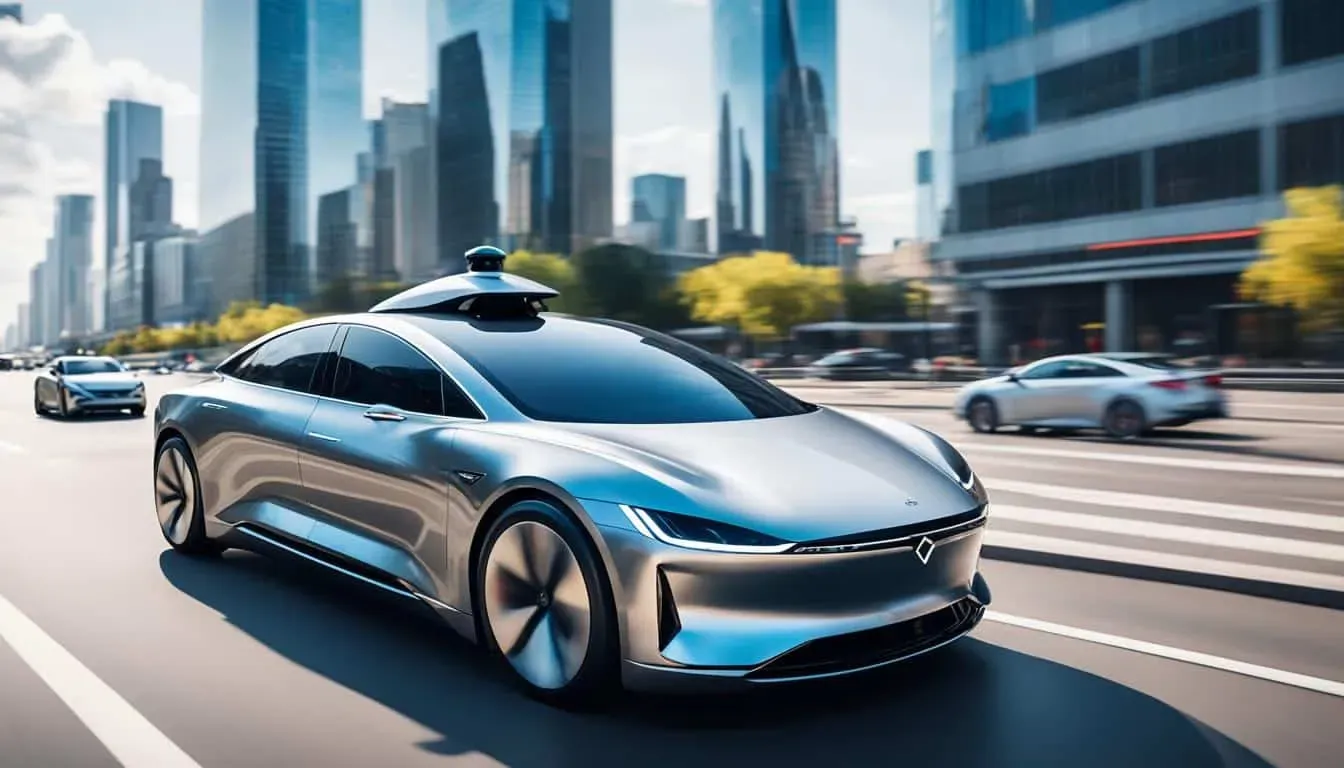
Self-Driving Cars are redefining how we move, blending autonomous vehicle technology with real-time computing and seamless connectivity. As these systems mature, V2X connectivity lets cars share speed, position, and intent with nearby vehicles and road infrastructure. That information exchange enables safer decisions, smoother traffic flow, and new mobility models that reduce congestion, improve predictability for drivers, and expand accessibility for communities that have been underserved. Developers emphasize robust perception, precise localization, and resilient software updates to keep the fleet secure and responsive. This introduction frames the journey ahead, highlighting the core technologies, connectivity paradigms, and societal impacts shaping the adoption of self-driving transportation.
Viewed through an alternative lens, the same phenomenon is described as autonomous driving, driverless vehicles, or automated mobility systems that harness sensing and AI. Industry discussions also refer to robotic taxis, connected vehicle ecosystems, and intelligent transport solutions that rely on perception, planning, and precise actuation. Across these terms, the emphasis remains on reliable sensing, cooperative communication, and secure software architectures that safeguard passengers and data. As standards evolve, researchers and policymakers will align safety, privacy, and infrastructure with these concepts.
Self-Driving Cars: The Unified Power of Autonomous Vehicle Technology and V2X Connectivity
Self-Driving Cars rely on autonomous vehicle technology that fuses perception, localization, and decision-making to navigate safely. From LiDAR, radar, cameras, and sensor fusion to high-definition maps and real-time AI planning, these systems create a reliable understanding of the environment. When paired with Vehicle-to-Vehicle communication (V2V) and broader V2X connectivity, the car can anticipate hazards, coordinate maneuvers with other road users, and improve traffic safety beyond what any single vehicle can achieve. Over-the-air (OTA) updates further keep the software current with safety patches and new features, reinforcing the value of autonomous vehicle technology in daily mobility.
Advanced driver-assistance systems (ADAS) lay the groundwork for gradual autonomy by delivering features such as adaptive cruise control, lane-keeping, and automated emergency braking. These ADAS capabilities help build public trust while integrating with perception, localization, and decision logic to support safe operation. As connectivity expands, car cybersecurity for autonomous vehicles becomes critical to protect the entire stack from threats, ensuring sensor data integrity, secure communications, and fail-safe operation across diverse environments.
V2V, V2X, and ADAS: Building Safe, Cooperative Mobility for the Future
V2V and V2X connectivity underpin safer, more efficient mobility by enabling vehicle-to-vehicle communication and vehicle-to-infrastructure interactions that share speed, position, and intended maneuvers. In urban corridors and on highways, this capability supports coordinated lane changes, improved gap management, and proactive hazard warnings, all enhanced by OTA software updates that keep the autonomous stack current and resilient.
As the traffic ecosystem becomes data-driven, robust car cybersecurity for autonomous vehicles becomes non-negotiable. A layered defense—secure boot, encrypted communications, intrusion detection, and continuous threat intelligence—protects perception, planning, and control systems from cyber threats. Clear data governance and privacy policies, plus regulatory guidance on OTA updates and V2X interoperability, are essential to maintaining user trust and ensuring safe, scalable adoption of autonomous mobility.
Frequently Asked Questions
How do Self-Driving Cars leverage autonomous vehicle technology, V2V/V2X connectivity, and ADAS to enhance safety and optimize traffic flow?
Self-Driving Cars rely on autonomous vehicle technology that fuses sensors, perception, and planning. They exchange data via V2V and V2X to share speed, position, and maneuvers, enabling predictive decisions, coordinated lane changes, and smoother traffic. Integrated ADAS features provide additional safety layers such as adaptive cruise control and automatic emergency braking, bridging to higher levels of autonomy.
Why is car cybersecurity for autonomous vehicles critical for Self-Driving Cars, and how do OTA updates and robust ADAS integration contribute to safety?
Car cybersecurity for autonomous vehicles is essential to protect safety-critical functions and privacy. A multi-layered approach includes secure boot, encrypted communications, and intrusion detection, with regular OTA updates to patch vulnerabilities. When cybersecurity is robust, V2X interoperability and reliable software control remain dependable, contributing to overall safety and public trust.
| Aspect | Key Points |
|---|---|
| Core autonomous vehicle technology (perception, localization, mapping) | Sensor fusion (LiDAR, radar, cameras, ultrasonics); AI-based scene interpretation; real-time planning and control; high-definition maps; redundancy for reliability. |
| Connectivity and data exchange | V2V/V2X communications; OTA software updates; V2I with traffic signals and edge nodes; cloud and edge computing for data sharing and coordination. |
| ADAS and gradual autonomy | Adaptive cruise control, lane-keeping, automatic emergency braking; gradual progression to higher autonomy; user trust and human-vehicle interaction. |
| Safety, cybersecurity, and regulation | Safety frameworks, fail-operational design, sensor redundancy; robust cybersecurity (secure boot, encryption, threat detection); OTA/regulatory standards. |
| Societal impact, economics, and mobility | Safety gains, mobility for seniors/disabled, urban access; efficiency and emissions improvements; shifts in ownership, ride-hailing, and autonomous freight. |
| Challenges and opportunities | Robustness in diverse weather, reliable perception in clutter, latency and interoperability; data governance and privacy; necessary infrastructure upgrades. |
| Real-world deployment and adoption | Pilot programs and partnerships; controlled deployments, mixed fleets, and scalable business models; building public trust and regulatory readiness. |
| Human factors and user experience | Transparent communication, intuitive interfaces, and robust fail-safes to ensure safety and rider/pedestrian confidence. |
Summary
Self-Driving Cars are transforming automobile technology and connectivity in ways that extend beyond the car itself. The integration of V2V and V2X connectivity, OTA updates, and robust ADAS features will redefine mobility and urban life. The road ahead promises safer roads, more efficient cities, and new economic models, but it also requires thoughtful policy, strong cybersecurity, and user-centric design. By balancing innovation with safety and privacy, the future of Self-Driving Cars—and the broader connected transportation ecosystem—can deliver measurable benefits for individuals and society. The journey toward widespread adoption will be iterative, collaborative, and guided by evolving standards and regulations, ensuring continued progress toward a smarter, safer, and more connected world.