
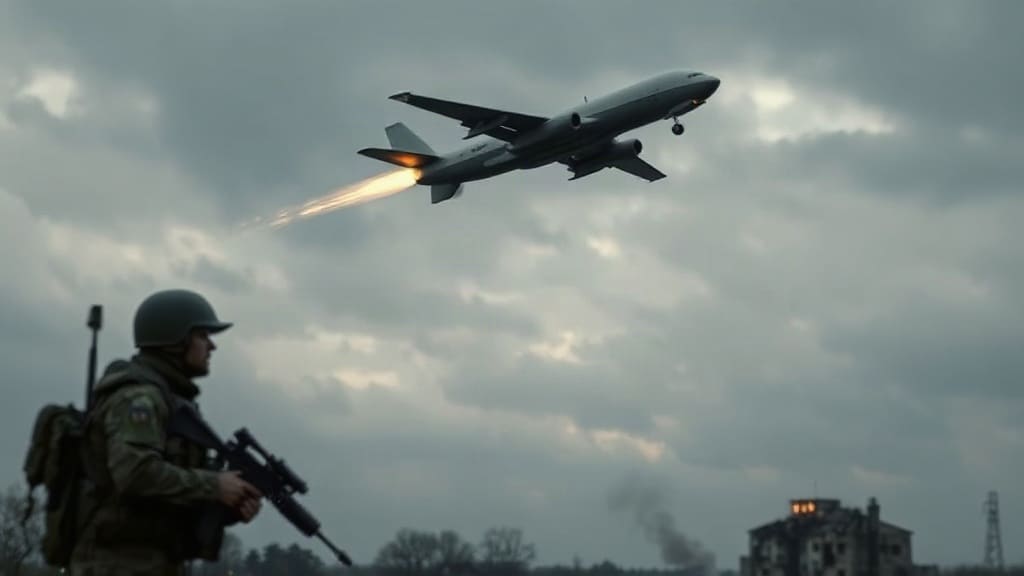
It is a sound that Ukrainian soldiers have learned to dread: a high-pitched whine, barely audible over the rumble of artillery, followed by a streak of metal moving too fast for the eye to track. Russia's newest jet-powered drones have arrived, and they are changing the calculus of the war in the skies. These are not the slow, propeller-driven Shahed-136s that have plagued Ukrainian cities for months. These are something faster, more agile, and far harder to stop. With near-daily launches now reported along multiple sectors of the front, Ukraine's air defenders are facing a problem that no amount of bravery alone can solve.
The Technology Behind the Speed
To understand why these drones are so dangerous, it helps to look at what makes them different. Traditional one-way attack drones like the Iranian-designed Shahed use a small piston engine, similar to what you might find in a lawnmower. They cruise at around 110 to 120 miles per hour, which gives air defense gunners time to react. A jet-powered drone, by contrast, uses a small turbojet engine. This allows it to reach speeds of up to 300 miles per hour, according to recent battlefield reports. That is faster than many of the short-range air defense systems currently deployed by Ukraine, including the man-portable Stinger missiles that were so effective in the early days of the war.
The shift is not just about top speed. Jet engines provide better acceleration and a higher cruising altitude. A drone flying at 300 miles per hour at 3,000 feet is a much harder target than a Shahed puttering along at 120 miles per hour at 1,500 feet. The engagement window shrinks from minutes to seconds. For a soldier with a shoulder-fired missile, that can mean the difference between a successful intercept and a direct hit on a power station or ammunition depot.
Daily Launches and the Strain on Air Defenses
Ukrainian military officials have confirmed that Russia is now launching these jet-powered drones on a near-daily basis. The targets vary: sometimes it is a forward command post, other times a logistics hub well behind the lines. But the frequency is what worries defense analysts most. Air defense is a game of attrition. Every interceptor missile fired is one less in the stockpile. Every radar system kept running around the clock is one that will need maintenance sooner. Russia's strategy appears to be simple: saturate the sky with enough fast-moving threats that something inevitably gets through.
Consider the math. A typical Ukrainian air defense team might have six Stinger missiles on hand. If a wave of four jet-powered drones comes in at once, the team has to decide in seconds which threats to engage and which to let pass. Even if every missile hits, that is four interceptors gone. Now imagine that same scenario repeating every day for a week. The stockpile runs dry, and the replacements are not always easy to come by. Western nations have been generous with military aid, but the supply of short-range air defense missiles is finite. Russia knows this. The daily launches are not just about destroying targets; they are about exhausting Ukraine's ability to defend itself.
Why This Matters for the War's Trajectory
The introduction of jet-powered drones is not a game-changer in the sense of a single decisive weapon. It is more like a slow bleed. Each successful strike may only take out a radar station or a fuel depot, but the cumulative effect is significant. Ukraine's air defense network is already stretched thin, covering a front line that runs for hundreds of miles. Every high-speed drone that slips through forces commanders to shift resources, leaving other areas vulnerable. This is exactly the kind of asymmetric pressure that Russia has used effectively throughout the conflict.
There is also a psychological dimension. Soldiers on the ground talk about the sound these drones make. It is a piercing, almost mechanical scream that signals imminent danger. The old Shaheds were loud but slow, giving people time to take cover. The new drones are on you before you know they are there. That kind of constant stress wears down even the most disciplined troops. Morale is hard to measure, but it is a real factor in a war that has already lasted far longer than anyone expected.
Can Ukraine Adapt?
Ukraine has proven remarkably resourceful throughout this war, and there are already signs of adaptation. One approach is to use electronic warfare to jam the drones' navigation systems. Jet-powered drones still rely on GPS for guidance, and GPS can be spoofed or blocked. However, jamming is not a silver bullet. Modern drones can switch to inertial navigation if GPS is lost, and jammers themselves become targets for Russian artillery. It is a cat-and-mouse game with no permanent winner.
Another option is to field more capable air defense systems, such as the German Gepard self-propelled anti-aircraft gun. The Gepard's 35mm cannons can track and engage fast-moving targets at close range, and its ammunition is relatively cheap compared to missiles. Ukraine has received a limited number of these systems, but not enough to cover the entire front. There is also the question of radar coverage. Detecting a small jet-powered drone at low altitude is difficult, especially in cluttered terrain. Mobile air defense teams often have to rely on visual spotting, which is nearly impossible against a target moving at 300 miles per hour.
The Broader Implications for Modern Warfare
What is happening in Ukraine is being watched closely by military planners around the world. The success of cheap, fast, jet-powered drones has implications far beyond this conflict. If a drone costing a few tens of thousands of dollars can force an adversary to expend a missile costing hundreds of thousands, the economics of defense become unsustainable. That is a lesson that will not be lost on other nations, both allies and adversaries. The era of the slow, vulnerable drone is ending. The future belongs to speed, and the side that adapts first will have a significant advantage.
There is also the question of proliferation. The technology behind these jet engines is not particularly advanced. Small turbojets have been used in model aircraft and cruise missiles for decades. Once the design becomes widely known, it is only a matter of time before other groups start producing their own versions. The genie is out of the bottle, and it is not going back in.
What Comes Next?
For now, Ukraine is fighting back with what it has. Air defense crews are being trained to prioritize the fastest threats, even if it means letting slower drones through. Radar operators are learning to distinguish jet-powered drones from other aircraft by their speed and altitude profiles. Engineers are working on new countermeasures, including directed-energy weapons that could shoot down drones at a fraction of the cost of missiles. But all of this takes time, and Russia is not standing still. The daily launches are likely to continue, and they may even increase in intensity as the weather improves.
The war in Ukraine has always been a testing ground for new technologies. Jet-powered drones are just the latest example. They are not a wonder weapon, but they are a serious problem, and they are forcing Ukraine to rethink its entire approach to air defense. The next few months will show whether adaptation can keep pace with escalation. One thing is certain: the skies over Ukraine are no longer safe for the slow and the vulnerable.
Frequently Asked Questions
How fast are Russia's new jet-powered drones?
Reports indicate that these drones can reach speeds of up to 300 miles per hour, which is significantly faster than the propeller-driven Shahed-136 drones that fly at around 110 to 120 miles per hour. This speed makes them difficult to intercept with shoulder-fired missiles.
Why are jet-powered drones harder to shoot down?
Their high speed reduces the engagement window for air defense systems. A drone moving at 300 miles per hour gives a missile operator only a few seconds to acquire, track, and fire. Additionally, they can fly at higher altitudes, which complicates visual detection and makes some short-range systems less effective.
How often is Russia launching these drones?
Ukrainian officials have described the launches as occurring on a near-daily basis, targeting both military and infrastructure sites along the front lines and in rear areas. This frequency is intended to strain Ukraine's air defense resources and force constant vigilance.
Can electronic warfare stop these drones?
Electronic warfare can jam the GPS signals that the drones rely on for navigation, but it is not a guaranteed solution. Many drones have backup inertial navigation systems, and jammers themselves can be targeted by enemy fire. It is one tool among many, not a complete answer.
What is Ukraine doing to counter this threat?
Ukraine is adapting by prioritizing fast-moving targets, improving radar detection methods, and seeking more capable air defense systems like the Gepard. Research into directed-energy weapons is also underway, though these are not yet widely deployed. The situation is evolving rapidly.