
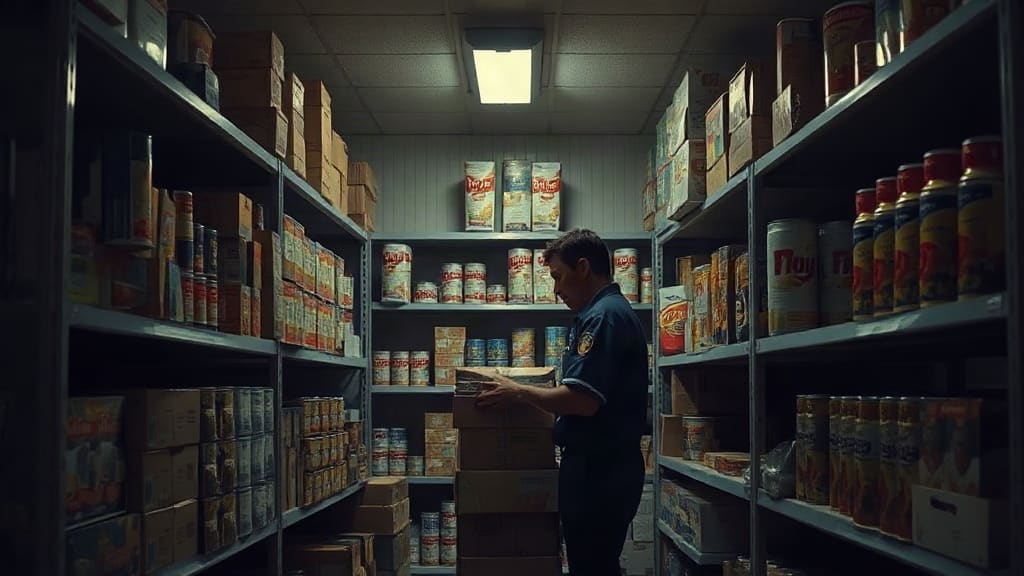
It is a scene that plays out daily across the country: a worker stacking shelves or working a till, head down, avoiding eye contact. They might be paid less than minimum wage, their passport held by an employer, or their movements controlled. A new investigation has uncovered that modern slavery victims are being found working in supermarkets and convenience stores, often in plain sight, exploited for profit by third-party labour providers or unscrupulous franchisees. This is not a problem confined to distant supply chains; it is happening on the high street, in the places we shop every day.
The findings come as the UK's anti-slavery commissioner and law enforcement agencies intensify their focus on labour exploitation in the retail sector. While much attention has been paid to modern slavery in agriculture, construction, and car washes, the presence of victims in retail environments has been underreported. Yet, according to data from the Gangmasters and Labour Abuse Authority (GLAA) and police forces, a growing number of cases involve workers in supermarkets, convenience stores, and fast-food outlets. These are often individuals trafficked from Eastern Europe, Africa, or Asia, lured by promises of legitimate work, only to find themselves trapped in debt bondage, forced to work long hours for little or no pay, and living in overcrowded, unsanitary conditions.
The Hidden Mechanics of Retail Exploitation
Modern slavery in retail rarely looks like the dramatic images of chains and locked doors. Instead, it is a web of subtle control mechanisms. Labour providers, often operating in the grey economy, recruit vulnerable workers and then supply them to stores under contracts that are opaque and difficult to audit. These providers may deduct exorbitant fees for accommodation, transport, or 'administration', leaving workers with a fraction of their wages. In some cases, workers are paid cash in hand, off the books, and are threatened with deportation or violence if they complain. The convenience store sector, with its high turnover of small independent franchises, is particularly vulnerable. A franchisee under financial pressure may turn to cheaper, unlicensed labour to cut costs, without the rigorous checks that larger corporate chains might have in place.
Take the case of a 34-year-old man from Romania, who was found working night shifts at a convenience store in the Midlands. He had been promised a job in a warehouse, paying £400 a week. Instead, he was forced to work 70 hours a week in the store, sleeping in a back room, and receiving only £50 a week after 'deductions'. His passport had been confiscated, and he was told that if he tried to leave, his family back home would be harmed. It was only when a customer noticed his gaunt appearance and called a helpline that he was rescued. This is not an isolated incident. Police forces across the UK have reported similar cases, with victims working in well-known supermarket chains as well as independent shops.
Why Retail is a Growing Target for Traffickers
The retail sector's vulnerability to modern slavery stems from several factors. First, the demand for flexible, low-skilled labour is high, particularly for night shifts, stock replenishment, and cleaning. This demand is often met through a complex chain of subcontractors, making it difficult to trace who is ultimately responsible for a worker's welfare. Second, the rise of online grocery delivery and 24-hour stores has increased the need for warehouse and logistics staff, many of whom are agency workers. Third, the pandemic disrupted traditional labour markets, pushing more people into precarious work and making them susceptible to exploitation.
Moreover, the retail industry's focus on cost-cutting and lean operations can inadvertently create incentives for exploitation. When a supermarket chain squeezes its suppliers on price, those suppliers may cut corners on labour standards. Similarly, when a store manager is under pressure to meet targets with fewer staff, they may turn a blind eye to the use of unvetted workers. The result is an environment where modern slavery can thrive unnoticed, hidden behind the everyday bustle of commerce.
Corporate Responsibility and Legal Frameworks
Under the UK's Modern Slavery Act 2015, large businesses are required to publish an annual statement outlining the steps they have taken to ensure that slavery and human trafficking are not taking place in their supply chains or any part of their business. However, critics argue that many statements are vague, lack meaningful metrics, and are not independently verified. The Act does not currently mandate specific due diligence measures, nor does it impose penalties for non-compliance beyond a court order to publish a statement. This has led to a situation where some companies treat the statement as a box-ticking exercise rather than a genuine commitment to eradicating exploitation.
There are signs of change. The UK government has announced plans to strengthen the Modern Slavery Act, including introducing mandatory human rights due diligence for companies, financial penalties for non-compliance, and the creation of a central registry of statements. The EU is also moving towards a directive that would require companies to conduct due diligence across their value chains. For the retail sector, this means that supermarkets and convenience stores will soon face much greater scrutiny of their labour practices, both direct and indirect. Some leading retailers have already begun to take proactive steps, such as auditing their labour providers, using technology to verify worker identities, and setting up worker helplines. But the pace of change is uneven, and many smaller operators remain unaware of their responsibilities.
What Can Be Done: A Multi-Stakeholder Approach
Addressing modern slavery in retail requires a coordinated effort from businesses, government, law enforcement, and civil society. For businesses, the first step is to map their entire labour supply chain, including subcontractors and agency workers, and to conduct risk assessments focused on indicators of forced labour. They should also implement robust grievance mechanisms that allow workers to report abuse without fear of retaliation, and they should work with reputable labour providers that adhere to ethical standards. Training for store managers and staff is crucial; they are often the first line of defence in spotting signs of exploitation, such as workers who appear malnourished, fearful, or unable to speak freely.
For consumers, awareness is key. While it is difficult to know which products or stores are free of exploitation, supporting brands that are transparent about their supply chains and labour practices can create market pressure for change. Consumers can also report suspicious situations to the Modern Slavery Helpline or local authorities. The helpline, operated by Unseen, has seen a significant increase in calls related to retail settings in recent years, suggesting that public vigilance is making a difference.
Law enforcement agencies are also stepping up their efforts. The GLAA has been granted new powers to investigate labour exploitation across the entire economy, not just in the sectors it traditionally regulated. Police forces are increasingly using data analytics to identify patterns of exploitation, and the National Crime Agency has prioritised modern slavery as a serious and organised crime threat. However, resources remain limited, and many cases go undetected. The conviction rate for modern slavery offences is still low, and victims often face significant barriers to coming forward, including language difficulties, fear of authorities, and trauma.
The Human Cost and the Path Forward
Behind every statistic is a human story of suffering and resilience. The victims of modern slavery in retail are often invisible, working unsociable hours in the back rooms of stores, their exploitation hidden by the very normality of their surroundings. They may be serving you at the checkout or stocking the shelves you browse, yet their plight remains unseen. The psychological and physical toll is immense: long-term health problems, broken families, and a deep sense of betrayal. For those who are rescued, the road to recovery is long and difficult, requiring comprehensive support including housing, legal advice, and mental health services.
The fight against modern slavery in retail is far from over, but there are reasons for cautious optimism. Increased media attention, stronger legal frameworks, and a growing corporate awareness are beginning to shift the landscape. Technology, such as blockchain for supply chain transparency and AI for risk detection, offers new tools for identifying and preventing exploitation. But technology alone is not enough. It must be accompanied by a genuine commitment to human rights, a willingness to ask difficult questions, and a culture of zero tolerance for exploitation. As consumers, we have a role to play too. By being informed, vigilant, and demanding accountability, we can help ensure that the next time we walk into a supermarket, we are not unwittingly complicit in modern slavery.
Frequently Asked Questions
What are the signs of modern slavery in retail workers?
Signs can include workers appearing malnourished, fearful, or unable to speak freely; signs of physical abuse; workers living at their place of work; lack of personal protective equipment; and workers being dropped off and collected in groups at unusual hours. If you suspect someone is a victim, do not confront the employer; instead, call the Modern Slavery Helpline or the police.
Are large supermarket chains involved in modern slavery?
While large chains have policies and auditing procedures, they can still be indirectly linked through their supply chains or third-party labour providers. Cases have been found in stores of major retailers, often involving subcontracted workers. The complex nature of labour supply chains makes it difficult to guarantee that no exploitation occurs, which is why due diligence is critical.
How can I report suspected modern slavery in a store?
In the UK, you can call the Modern Slavery Helpline on 08000 121 700, or report to the police on 101 (or 999 in an emergency). You can also contact Crimestoppers anonymously on 0800 555 111. Provide as much detail as possible, such as the store location, description of the worker(s), and any vehicle details if relevant.
What is the UK government doing to stop modern slavery in retail?
The government has proposed amendments to the Modern Slavery Act to make human rights due diligence mandatory for large businesses, introduce financial penalties for non-compliance, and create a public registry of modern slavery statements. Additionally, the GLAA has expanded its remit to include all sectors, and law enforcement agencies are prioritising labour exploitation cases.
Can consumers make a difference in preventing retail slavery?
Yes. Consumers can support retailers that are transparent about their supply chains and labour practices, ask questions about where products come from, and report suspicious activities. Public pressure has already led some companies to improve their practices, and continued vigilance can drive further change.