
In a cycle where several Republican Senate hopefuls in battleground states have started to put daylight between themselves and President Trump, North Carolina's Michael Whatley is doing the opposite. He is not just standing by the president; he is making that loyalty a centerpiece of his campaign. The approach is either a bold bet on the enduring power of the MAGA base or a stubborn refusal to read the room. Either way, it is one of the most closely watched strategic decisions of the 2026 midterms.
Whatley, a former chair of the North Carolina Republican Party and a former general counsel for the Republican National Committee, has long been a fixture in the party's institutional wing. His willingness to stick with Trump, even as his Senate race appears increasingly competitive, offers a window into the broader identity crisis facing the GOP. It also raises a question that will define the cycle: in a state that Trump won by a narrow margin in 2024, is full-throated loyalty still an asset, or has it become a liability?
The Loyalty Play in a Changing Landscape
The political environment heading into 2026 is not the same as it was in 2024. Trump's approval ratings have hovered in the mid-to-low 40s in most national polling averages, and in key Senate battlegrounds, Republican candidates have begun to recalibrate. In states like Michigan, Wisconsin, and Georgia, some GOP contenders have quietly emphasized their independence, highlighting local issues and distancing themselves from the White House on tariffs, entitlement reform, and foreign policy.
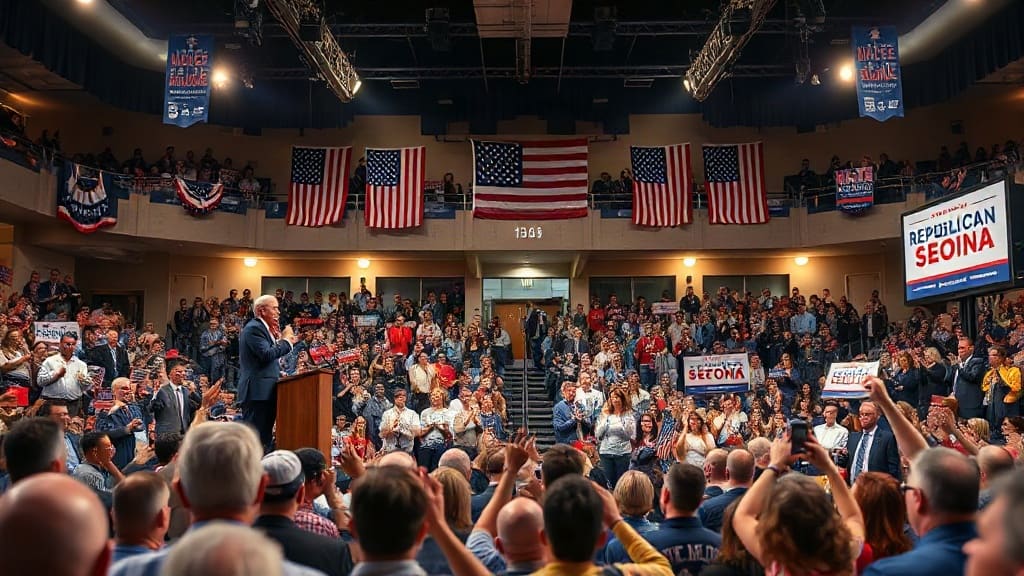
Whatley has taken the opposite approach. At a recent campaign stop in Charlotte, he told supporters that he was proud to have stood with Trump when it was not politically convenient, and that he would continue to do so. The line drew cheers from the crowd, but it also underscored the gamble. By tying himself so closely to the president, Whatley is betting that the Republican base in North Carolina remains as energized as it was in 2024, and that swing voters who might be turned off by Trump will ultimately prioritize other issues.
Why the Base Still Matters
There is a logic to Whatley's strategy. North Carolina is not a pure swing state. It has a strong Republican lean in federal races, and Trump carried it in 2024 by about three percentage points. The state's Republican primary electorate is deeply loyal to Trump, and any sign of wavering could depress turnout or invite a primary challenge from the right. Whatley, who has never run for statewide office before, needs that base to be fully mobilized.
Moreover, Whatley's resume is built on party service. He chaired the state GOP during a period of significant gains, and he served as general counsel at the RNC during a time when the party was reshaping its legal strategy around election integrity. For him, loyalty to Trump is not just a political calculation; it is part of his brand. Breaking with the president now would undermine the very foundation of his candidacy.
The Risks of Standing Alone
But the strategy is not without peril. North Carolina has a sizable suburban electorate, particularly around Raleigh, Charlotte, and the Research Triangle, where moderate Republicans and unaffiliated voters have shown a willingness to split their tickets. In 2024, Democrat Josh Stein won the governor's race by a comfortable margin, even as Trump carried the state. That suggests a significant number of voters are willing to support Republicans down-ballot while also checking the president's power.
Whatley's Democratic opponent is likely to hammer him on this point. If the race becomes a referendum on Trump, Whatley could find himself underwater with the very voters he needs to win. Already, Democratic groups have begun running ads tying Whatley to the president's more controversial positions, including on Jan. 6 pardons and federal workforce reductions. The question is whether those attacks will stick in a state where Trump remains more popular than he is nationally.
The Money and the Math
Campaign finance reports will be an early indicator of whether Whatley's strategy is working. If he can raise enough money from national Republican donors and grassroots supporters, he will have the resources to define the race on his terms. If, however, donors begin to see him as too closely aligned with an unpopular president, they may hedge their bets or direct funds to other races.
So far, the signals are mixed. Whatley has received endorsements from several prominent Trump allies, and he has been a frequent guest on conservative media. But some establishment donors have privately expressed concern that his loyalty could cost him in the general election. The National Republican Senatorial Committee has not publicly weighed in on his strategy, but its spending decisions will speak volumes.
The Broader GOP Divide
Whatley's choice reflects a deeper split within the Republican Party. On one side are those who believe that Trump's coalition is the only path to victory in the modern GOP, and that any deviation is a recipe for defeat. On the other are those who argue that the party must broaden its appeal to survive in a changing electorate. The 2026 cycle will be a test of which theory holds.
In North Carolina, that test is particularly acute. The state is rapidly urbanizing, and its electorate is becoming more diverse. Whatley's ability to hold the Trump base while making inroads with moderates will determine whether he can thread the needle. His decision to stick with Trump is not just a personal loyalty; it is a strategic bet on the future of the party.
What to Watch
Over the next few months, keep an eye on three things. First, whether Whatley's poll numbers among unaffiliated voters start to slip. Second, whether national Democrats decide to invest heavily in North Carolina, which would signal they see an opportunity. Third, whether other Republican candidates in similar states follow Whatley's lead or continue to distance themselves. Each of these will tell us whether loyalty to Trump is still the safest bet in Republican politics, or whether 2026 is the year the calculus changes.
Frequently Asked Questions
Who is Michael Whatley?
Michael Whatley is a Republican politician from North Carolina. He previously served as chairman of the North Carolina Republican Party and as general counsel for the Republican National Committee. He is currently running for the U.S. Senate in North Carolina.
Why is Whatley's loyalty to Trump significant?
It is significant because other Republican Senate candidates in battleground states have begun to distance themselves from Trump. Whatley's decision to stick by the president stands out as a strategic choice that could either energize the base or alienate swing voters, depending on how the race unfolds.
What are the risks of Whatley's strategy?
The main risk is that he could lose support among moderate and unaffiliated voters, especially in suburban areas like Raleigh and Charlotte. If the race becomes a referendum on Trump, Whatley may struggle to win over voters who split their tickets in 2024.
How does North Carolina's political landscape affect the race?
North Carolina is a competitive state that Trump won narrowly in 2024, but Democrats have had recent success in statewide races. The electorate includes a significant number of unaffiliated voters who can swing elections, making it a key battleground for Senate control.
What should we watch next in this race?
Watch Whatley's fundraising numbers, his polling among unaffiliated voters, and whether national Democrats invest heavily in the state. Also, see whether other Republican candidates follow his lead or continue to distance themselves from Trump.