
Lois Lowry has long been a singular voice in young adult literature, a writer who trusts her readers to grapple with complex ideas wrapped in deceptively simple prose. From the devastating moral clarity of Number the Stars to the unsettling utopia of The Giver, her work has consistently asked: What does it mean to be human, and what are we willing to sacrifice to belong? Her latest novel, Building 903, continues that inquiry with a story that feels both timeless and urgently contemporary.
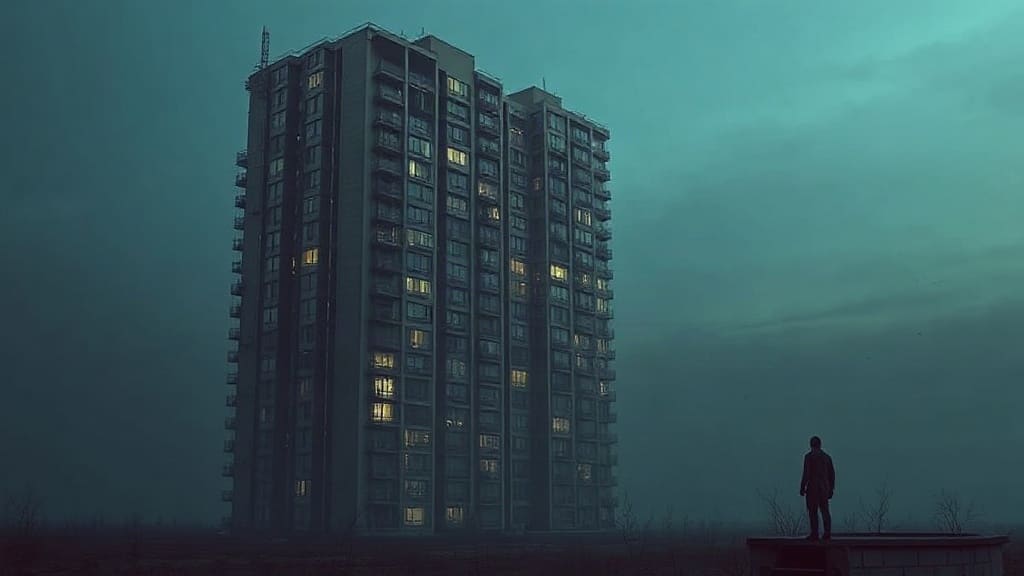
Building 903 centers on a community living in a massive, self-contained apartment complex, a vertical world where every need is met and every movement is monitored. The protagonist, a young resident named Elara, begins to question the official history of her home after discovering a hidden cache of letters from the time before the building was sealed. Lowry uses this premise to explore how memory shapes identity, and what happens when a society decides that forgetting is the price of peace.
The novel is not a direct sequel to The Giver, but it shares its DNA. Both books examine the seductive safety of a controlled world and the painful necessity of choice. Yet Building 903 stands on its own, with a cast of characters whose struggles feel immediate and personal. Elara's journey is less about grand rebellion and more about quiet acts of resistance: keeping a diary, asking a forbidden question, befriending someone from a different floor. These small moments accumulate into a powerful meditation on courage.
A World Built on Silence
Lowry's world-building is masterful in its restraint. She doesn't drown the reader in exposition; instead, she reveals the rules of Building 903 through Elara's daily routines and the subtle gaps in official explanations. We learn that residents are assigned to floors based on their usefulness, that certain words have been removed from the lexicon, and that the outside air is said to be toxic. The building itself becomes a character: its humming elevators, its recycled air, its endless corridors that seem to loop back on themselves.
The author's prose is as clean and evocative as ever. She has a gift for the telling detail, like the way Elara notices that the building's artificial sunlight never quite matches the angle of real shadows, or how the communal meals taste identical no matter what is served. These observations build a quiet dread that lingers long after the final page.
What makes Building 903 particularly resonant is its refusal to offer easy answers. The authorities in the building are not cartoon villains; they genuinely believe they are protecting their people from a chaotic and dangerous world. Elara's discovery of the letters complicates her understanding of the past, forcing her to confront the possibility that the outside might be both terrible and beautiful. Lowry respects her readers enough to leave some questions unresolved, trusting them to sit with the ambiguity.
The Weight of Memory
At its core, the novel is about the stories we tell ourselves to survive. The building's founders created a narrative of safety and order, but that narrative required erasing the memories of those who came before. Elara's act of reading the letters is an act of recovery, a way of piecing together a self that the building tried to erase. Lowry suggests that memory is not just a record of the past but a compass for the future.
This theme is echoed in the relationships Elara forms. She befriends an elderly maintenance worker who remembers fragments of the old world, and a boy from a lower floor who has taught himself to read forbidden books. These connections are fragile and risky, but they give Elara the strength to question the only life she has known. The novel argues that community is not about uniformity but about the willingness to share our vulnerable truths.
Lowry's Enduring Legacy
Lois Lowry has been writing for young readers for over four decades, and Building 903 shows no decline in her powers. If anything, her voice has grown more urgent. The novel speaks directly to contemporary anxieties about surveillance, misinformation, and the erosion of privacy, yet it never feels like a lecture. Lowry understands that the best way to reach young readers is through story, not sermon.
Fans of The Giver will find familiar pleasures here: the crisp sentences, the moral seriousness, the sense of a world that is both alien and uncomfortably close. But Building 903 is not a retread. It is a fresh exploration of ideas that Lowry has been refining her entire career. The book stands as a testament to her belief that young people are capable of grappling with difficult questions, and that literature can be a tool for resistance.
In a time when so much young adult fiction is dominated by high-stakes fantasy and romance, Lowry's quiet, thoughtful science fiction feels like a necessary corrective. She reminds us that the most powerful stories are often the ones that ask us to look inward, to examine the walls we have built around ourselves. Building 903 is a haunting, hopeful novel that deserves a place on the shelf next to her best work.
Frequently Asked Questions
Is 'Building 903' connected to 'The Giver'?
No, Building 903 is a standalone novel. While it shares thematic similarities with The Giver, it features a new setting and characters. Readers do not need to have read any of Lowry's previous books to enjoy it.
What age group is 'Building 903' intended for?
Like many of Lowry's books, it is marketed for young adults, but its themes and storytelling appeal to a wide range of readers, including adults. The prose is accessible, but the ideas are complex.
What are the main themes of 'Building 903'?
The novel explores memory, identity, the cost of safety, and the importance of questioning authority. It also examines how communities are built on shared stories and what happens when those stories are manipulated.
Is there a sequel planned?
There has been no official announcement about a sequel. Lowry has stated in interviews that she prefers to leave some stories open to interpretation.
Where can I find more books like 'Building 903'?
If you enjoy thoughtful dystopian fiction, consider works by authors such as Margaret Atwood, M.T. Anderson, and Jeanne DuPrau. Lowry's own backlist, including Gathering Blue and Messenger, is also a great place to start.