
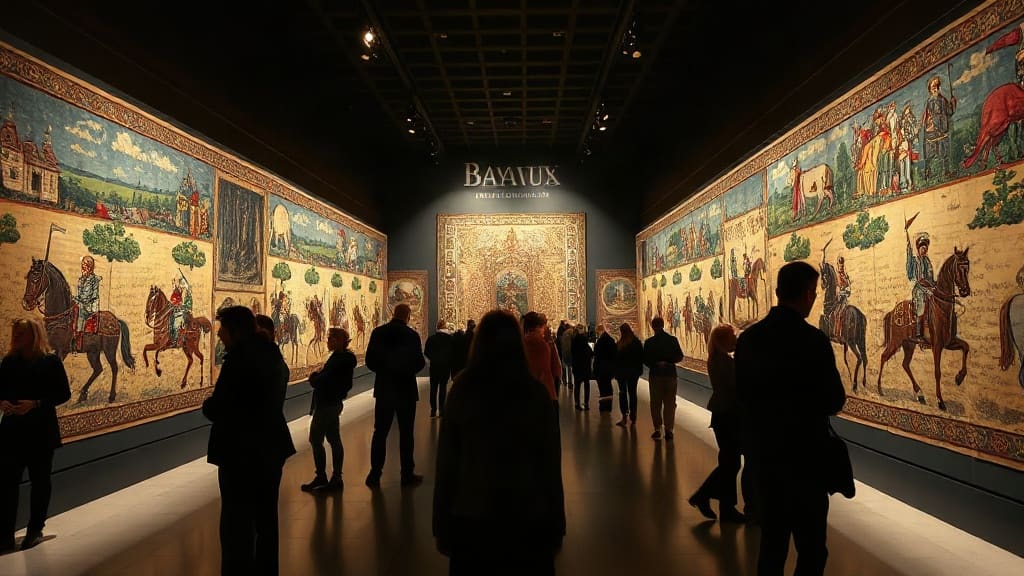
Walking into the British Museum's latest blockbuster exhibition feels like stepping through a portal into the 11th century. The Bayeux Tapestry, that extraordinary 70-metre-long embroidered cloth, has left its home in Normandy for the first time in 950 years, and the result is nothing short of breathtaking. King Charles III, who visited the exhibition ahead of its public opening, described the display as 'unprecedented' and 'a triumph of cultural diplomacy'. His words carry weight, but they barely scratch the surface of what makes this event so remarkable.
A Royal Seal of Approval
When the King praises an exhibition, people listen. His endorsement of the Bayeux Tapestry display is not mere politeness; it reflects a deep personal interest in history and a keen awareness of the tapestry's role in the shared story of Britain and France. The King spent over an hour examining the intricate scenes, accompanied by the French Ambassador and the museum's director. He was particularly taken with the depiction of King Harold's coronation and the infamous arrow-in-the-eye moment, though historians still debate whether that detail is accurate.
The royal visit was more than a photo opportunity. It signalled the importance of cultural exchange at a time when political relations between the UK and France are, to put it mildly, complicated. The exhibition is the centrepiece of a broader cultural season designed to strengthen ties between the two nations. In that context, the King's words carry a diplomatic weight that goes beyond the usual pleasantries.
Why the Bayeux Tapestry Still Captivates
To understand why this exhibition is such a big deal, you have to appreciate what the Bayeux Tapestry actually is. It is not a tapestry in the traditional sense but a work of embroidery, stitched with wool yarn on linen. It tells the story of the Norman Conquest of England in 1066, from the build-up to the Battle of Hastings to William the Conqueror's victory. Despite its age, the tapestry remains astonishingly vivid, with over 600 human figures, 200 horses, and countless details that reveal the fashions, weapons, and even the humour of the medieval world.
What makes the London exhibition unprecedented is not just the tapestry's presence but the way it is presented. The British Museum has used cutting-edge digital technology to bring the embroidery to life. Visitors can zoom in on individual stitches, explore the Latin inscriptions, and even watch animated sequences that reconstruct the battle. It is a marriage of ancient craftsmanship and modern innovation that appeals to schoolchildren and scholars alike.
The Journey from Bayeux to London
Getting the tapestry to London was a logistical feat. The fragile textile, which is nearly a millennium old, required a specially designed climate-controlled case and a team of conservators who monitored its condition every step of the way. The journey was kept secret until the last moment for security reasons, but when the news broke, it sparked a wave of excitement on both sides of the Channel. For many Britons, this is a once-in-a-lifetime chance to see a piece of their own history that has been housed in France for centuries.
The exhibition also includes a range of related artefacts, from Norman weapons to illuminated manuscripts, that provide context for the tapestry's creation. Scholars believe the tapestry was commissioned by Bishop Odo, William's half-brother, and made in England, possibly in Canterbury. Its exact origins remain a mystery, but that only adds to its allure.
Cultural Diplomacy at Its Finest
King Charles's use of the word 'unprecedented' is telling. The loan of the Bayeux Tapestry is the result of years of negotiation between the British Museum and the French authorities, and it would not have happened without political will on both sides. The French President has reportedly been a strong advocate for the loan, seeing it as a gesture of goodwill that transcends the usual squabbles over fishing rights and border controls. In a world where cultural heritage is often caught up in nationalist rhetoric, this exhibition stands as a reminder that great art belongs to everyone.
The timing is also significant. The exhibition opens just as the UK and France are marking the 120th anniversary of the Entente Cordiale, the series of agreements that laid the groundwork for their modern alliance. The tapestry, which depicts a moment of conquest and conflict, is now being used to promote friendship and cooperation. It is a powerful example of how history can be reinterpreted for the present day.
Practical Information for Visitors
If you are planning to see the exhibition, be prepared for crowds. The British Museum has introduced timed entry slots to manage demand, and tickets are selling fast. The exhibition runs for six months, but the museum advises booking well in advance, especially for weekends. Admission is free for members, and there are discounted rates for students and seniors. The museum has also produced an audio guide narrated by a well-known historian, which is well worth the extra cost.
One tip from someone who has already been: allow at least two hours to do the exhibition justice. The tapestry itself is displayed in a long, winding gallery that encourages you to walk slowly and take in the details. There are benches at regular intervals, so you can sit and contemplate the scenes without feeling rushed. And do not miss the final room, which features a full-scale digital replica that you can zoom into at your leisure.
The Legacy of the Exhibition
Long after the tapestry returns to Bayeux, this exhibition will be remembered as a landmark moment. It has already sparked renewed interest in medieval history, with schools reporting a surge in bookings for related workshops. The British Museum has also announced a series of public lectures and a major academic conference to coincide with the display. For the King, who has often spoken about the importance of understanding the past to navigate the present, the exhibition is a vindication of his belief in the power of culture.
There is something profoundly moving about standing before a piece of cloth that has survived wars, revolutions, and the passage of nearly a thousand years. It is a reminder that history is not just a series of dates and battles but a living, breathing story that continues to shape our world. The Bayeux Tapestry exhibition at the British Museum is more than a blockbuster; it is a bridge between nations and a testament to the enduring power of human creativity.
Frequently Asked Questions
How long will the Bayeux Tapestry be on display in London?
The exhibition is scheduled to run for six months, giving plenty of time for visitors to plan their trip. However, due to high demand, it is advisable to book tickets as early as possible. The museum has not ruled out an extension, but that would depend on conservation requirements and diplomatic agreements.
Is the Bayeux Tapestry exhibition suitable for children?
Absolutely. The exhibition has been designed with families in mind, featuring interactive displays and a family trail that helps younger visitors engage with the story. The digital animations are particularly popular with children, and the museum offers free activity sheets at the entrance.
Can I take photographs inside the exhibition?
Photography is allowed in most areas of the exhibition, but the use of flash is strictly prohibited to protect the delicate fibres of the tapestry. Selfie sticks and tripods are not permitted. The museum encourages visitors to share their photos on social media using a dedicated hashtag.
What other artefacts are on display alongside the tapestry?
The exhibition includes a rich array of objects from the Norman period, including swords, shields, jewellery, and illuminated manuscripts. Many of these items have never been displayed together before, offering a comprehensive view of the world in which the tapestry was created.