
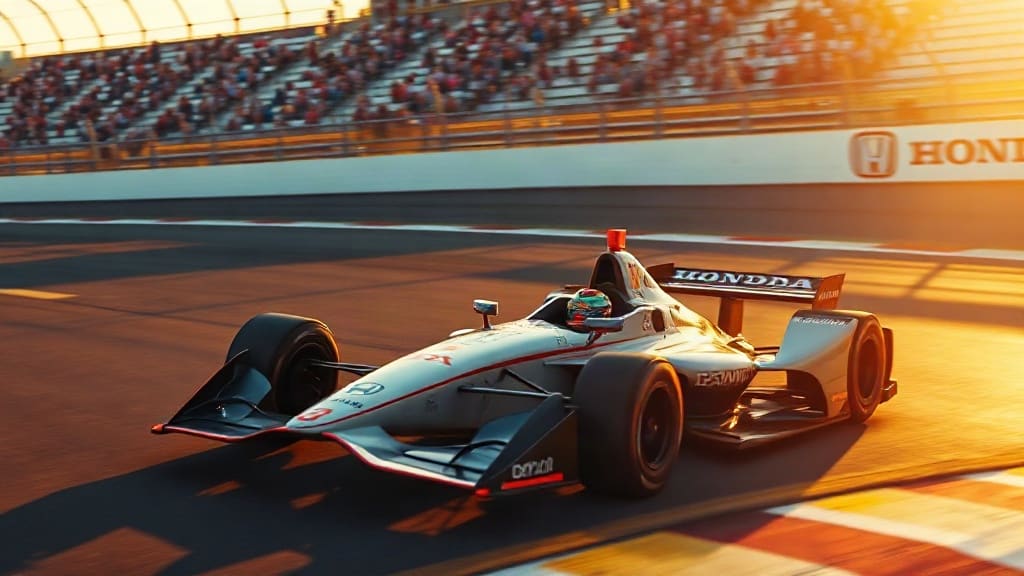
When the checkered flag fell on the 2024 IndyCar season, it marked more than just the end of another racing year. It closed a remarkable chapter for Honda Performance Development (HPD) and its departing president, David Salters. Under his watch, Honda captured the manufacturers' championship and powered a driver to the title, cementing a legacy that will resonate long after his departure. Salters didn't just leave; he went out on top, a rare feat in the cutthroat world of motorsport.
A Leader Who Understood the Assignment
David Salters wasn't a household name to casual race fans, but within the paddock, his reputation was sterling. Taking the helm of HPD at a time of transition, he inherited an operation already steeped in success. Yet Salters didn't coast. He pushed for incremental gains, refined engine development, and fostered a culture where engineers and drivers felt empowered to chase perfection. His approach was methodical, almost academic, reflecting his deep background in powertrain engineering.
Under his leadership, Honda's IndyCar program became a model of consistency. The 2.2-liter twin-turbo V6 engine, a product of years of iterative development, delivered both power and reliability. Salters often emphasized that winning in IndyCar isn't about a single breakthrough; it's about grinding out small advantages week after week. That philosophy paid off handsomely.
The Championship Formula
The 2024 season was a masterclass in execution. Honda-powered entries won multiple races, but more importantly, they rarely faltered. In a series where a single mechanical failure can derail a title bid, Honda's engines ran like clockwork. The manufacturers' championship, awarded based on points accumulated by the top two finishing cars from each manufacturer, was secured with races to spare. It was a testament to Salters' insistence on reliability without sacrificing performance.
But the crown jewel was the drivers' championship. While Salters was quick to credit the team and driver, the engine underneath the hood was a critical piece. The final race at Nashville Superspeedway was tense, but the Honda-powered car delivered when it mattered most. As the confetti fell, Salters stood quietly in the background, a satisfied smile on his face. He had done his job.
More Than Just Engines
Salters' impact extended beyond the dyno room. He was a vocal advocate for the series' long-term health, engaging in discussions about future regulations and the balance between innovation and cost control. He understood that Honda's involvement in IndyCar wasn't just about marketing; it was about proving engineering excellence on a global stage. His ability to communicate that vision to both executives in Japan and stakeholders in America was crucial in sustaining the program's momentum.
During his tenure, Honda also deepened its commitment to young driver development. Several rising stars got their first taste of IndyCar in Honda-powered machinery, a pipeline that Salters championed. He believed that nurturing talent was as important as refining fuel maps. This holistic approach earned him respect across the paddock, from rival team owners to rookie drivers.
Legacy in the Fast Lane
Leaving after a championship is the dream scenario for any motorsport executive. It avoids the awkwardness of a decline and allows the outgoing leader to be remembered for peak performance. Salters' departure, announced quietly as the season wound down, felt less like an ending and more like a seamless transition. HPD is well-positioned for the future, with a deep bench of engineering talent and a clear technical direction.
For Honda, the challenge will be maintaining that edge. IndyCar's competitive landscape is brutal, with Chevrolet always lurking. But the foundation Salters built is rock solid. The processes, the people, and the philosophy are all in place. His successor inherits a winning machine, not a rebuilding project.
What's Next for Honda and IndyCar?
The timing of Salters' exit coincides with broader changes in the series. The introduction of hybrid technology in 2024 added a new layer of complexity, and Honda was at the forefront of that integration. The hybrid system, developed in partnership with the series and other manufacturers, represents the future of IndyCar's powertrain. Salters was instrumental in ensuring Honda's system was both competitive and reliable from day one.
Looking ahead, Honda's commitment to IndyCar remains strong. The company has repeatedly affirmed its support for the series, and the championship win only strengthens that bond. For fans, the transition may be seamless, but insiders know that replacing a leader of Salters' caliber is no small task. The hope is that the culture he cultivated will endure.
A Farewell Without Regrets
David Salters leaves HPD with his head held high. He didn't overstay his welcome, and he didn't exit under a cloud. Instead, he authored a perfect final chapter: a championship, a legacy of innovation, and a team poised for continued success. In a sport where endings are often messy, Salters' departure was a masterstroke of timing and grace.
As the IndyCar paddock packs up for the offseason, there's a quiet acknowledgment that an era has ended. But it's not a sad ending. It's a celebration of a job well done, a race run to perfection, and a leader who understood that winning isn't just about the trophy—it's about building something that lasts. David Salters did exactly that, and he walked away a winner.
Frequently Asked Questions
What did David Salters achieve as president of Honda Performance Development?
During his tenure, David Salters led HPD to multiple IndyCar manufacturers' championships and oversaw the development of the highly successful 2.2-liter twin-turbo V6 engine. His leadership also included the integration of hybrid technology into the series in 2024, which Honda executed flawlessly, contributing to a drivers' championship that year.
Why is David Salters leaving Honda after winning the championship?
While specific reasons for his departure have not been publicly detailed, leaving after a championship season is often seen as an ideal exit. It allows for a positive legacy and a smooth transition. Salters' departure appears to be a planned career move, not a reaction to any internal issues, and HPD is well-prepared for the future.
How has David Salters influenced Honda's IndyCar program long-term?
Salters' influence is evident in HPD's culture of continuous improvement, its commitment to reliability, and its support for young driver development. He also strengthened Honda's relationship with the series and its stakeholders, ensuring the program's stability. His emphasis on incremental gains over flashy breakthroughs has become a hallmark of Honda's approach.
Will Honda remain competitive in IndyCar after Salters' departure?
Yes, Honda is expected to remain highly competitive. The infrastructure, engineering talent, and technical philosophy that Salters helped build are still in place. The company's deep commitment to IndyCar, combined with a strong foundation, positions Honda well for future success, even as new leadership takes the reins.