
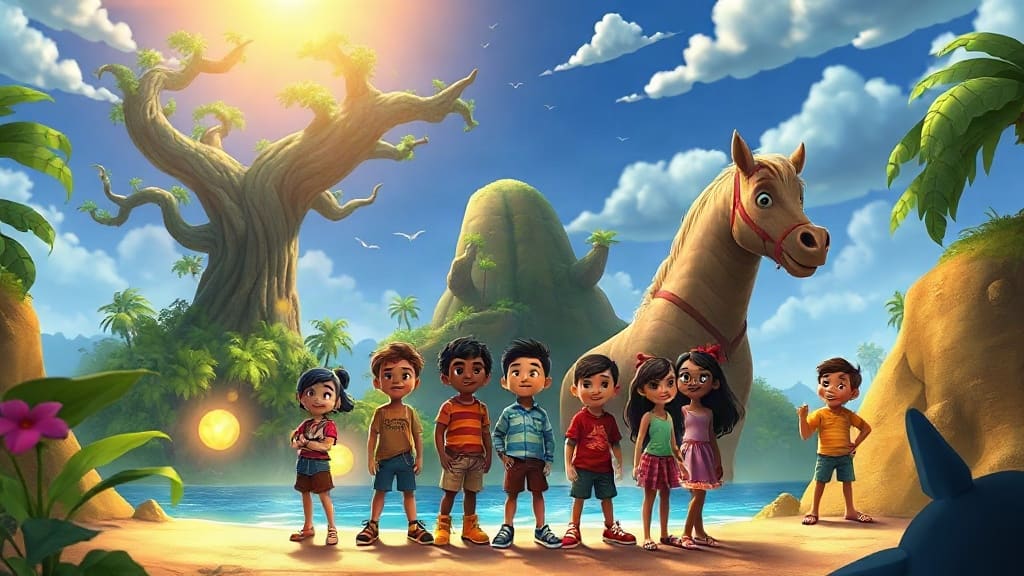
What do you get when you cross the amnesiac chaos of The Hangover with the vibrant tapestry of Filipino folklore, then filter it through the hyperactive lens of DreamWorks Animation? The answer is Forgotten Island, a film that packs a dizzying amount of plot, creatures, and jokes into its runtime, yet somehow never loses sight of the friendship at its core. It's a wild ride that will delight kids and might just teach them a thing or two about a culture rarely spotlighted in mainstream animation.
The story kicks off with a group of friends who wake up on a mysterious island with no memory of how they got there. Sound familiar? It's a setup that immediately evokes The Hangover, but instead of Las Vegas, we're in a lush, supernatural landscape brimming with mythical beings from Filipino folklore. The friends must piece together the events of the previous night while navigating a world where ancient spirits, mischievous elves, and shape-shifting monsters are very real. The stakes are high, but the tone remains light and comedic, making it accessible for younger viewers.
A Hyperactive Blend of Comedy and Culture
From the first frame, Forgotten Island establishes its hyperactive energy. The animation is bright and kinetic, with characters constantly in motion and visual gags layered into every scene. It's the kind of film that rewards attention, as background details often contain clever nods to Filipino culture. The humor ranges from slapstick to witty one-liners, ensuring that both kids and adults find something to laugh at. But what sets this film apart is its seamless integration of folklore. Rather than simply using mythical creatures as window dressing, the story weaves them into the fabric of the plot, making them essential to the characters' journey.
The Filipino folklore elements are handled with care and respect, offering a refreshing alternative to the typical European fairy tales that dominate children's media. We encounter a kapre, a tree-dwelling giant who is more misunderstood than menacing, and a tikbalang, a horse-headed humanoid who leads the friends astray. There's also a manananggal, a self-segmenting flying creature that provides one of the film's most thrilling sequences. Each creature is introduced with a brief explanation, subtly educating the audience without feeling like a lecture. It's a smart way to expose children to new cultures while keeping the entertainment front and center.
The Heart of the Story: Friendship
Amidst all the chaos, the film's emotional core is the friendship between the main characters. As they work together to solve the mystery of their lost night, they learn to rely on each other's strengths and forgive each other's weaknesses. The dynamic feels genuine, with moments of conflict that are resolved through communication and empathy. It's a positive message that doesn't feel heavy-handed, thanks to the script's sharp wit and the cast's lively performances.
The voice cast brings these characters to life with infectious energy. While the film doesn't rely on big-name stars, the actors deliver performances that are full of personality. The leader of the group, a headstrong girl named Maya, is voiced with a perfect mix of determination and vulnerability. Her best friend, a goofy boy named Ben, provides comic relief but also has moments of surprising depth. The supporting characters, including a wise-cracking tiyanak (a vampiric baby creature), add flavor without overwhelming the narrative.
Visuals and Sound: A Feast for the Senses
DreamWorks Animation continues to impress with its visual storytelling. The island itself is a character in its own right, with lush jungles, glowing caves, and hidden waterfalls that beg to be explored. The color palette is vibrant, drawing from the natural beauty of the Philippines. The character designs are expressive and varied, capturing the unique traits of each mythical being. The action sequences are fluid and exciting, though some may find the rapid editing a bit overwhelming. The soundtrack, featuring a mix of traditional Filipino instruments and modern beats, complements the on-screen action perfectly, enhancing both the comedic and heartfelt moments.
Why It Matters: Representation and Education
In an industry where cultural representation is still an ongoing battle, Forgotten Island stands out as a positive example. By centering on Filipino folklore, it introduces young audiences to stories that have been passed down for generations. It also provides Filipino children with the rare joy of seeing their culture reflected on the big screen. The film doesn't exoticize or simplify the folklore; it presents it as a living, breathing part of the characters' world. This approach not only entertains but also educates, fostering curiosity about different cultures.
Moreover, the film's kid-friendly take on The Hangover concept is clever. It takes a premise associated with adult partying and transforms it into a mystery that kids can enjoy. There's no alcohol or questionable behavior; instead, the amnesia is caused by a magical spell. The friends must retrace their steps by following clues and interacting with the island's inhabitants. It's a smart way to repurpose a familiar trope for a younger audience without dumbing it down.
Potential Criticisms and Considerations
No film is perfect, and Forgotten Island has its share of flaws. The hyperactive pacing might be too much for some viewers, especially parents looking for a calmer movie experience. The plot is dense, with multiple subplots and characters vying for attention, which could confuse younger children. Additionally, while the folklore is handled respectfully, some purists might argue that certain creatures are simplified for comedic effect. However, given the target audience, these are minor quibbles. The film's strengths far outweigh its weaknesses.
Another point to consider is the marketing. DreamWorks is positioning this as a fun, family-friendly adventure, which is accurate. But the Hangover comparison in the title might mislead some parents into thinking it's inappropriate. Rest assured, it's entirely suitable for kids. The humor is clean, the scares are mild, and the messages are positive. It's a film that families can enjoy together, with plenty of jokes for adults that will fly over kids' heads.
Final Thoughts
Forgotten Island is a delightful addition to DreamWorks' animated catalog. It successfully blends a high-energy comedy with cultural education, all while keeping the focus on friendship and teamwork. The Filipino folklore adds a unique flavor that sets it apart from other animated films. While it may not reach the emotional depths of some of DreamWorks' best, it's a solid, entertaining ride that will leave audiences smiling. If you're looking for a movie that will keep the kids engaged and maybe teach them something new, Forgotten Island is well worth a watch.
Frequently Asked Questions
Is Forgotten Island suitable for young children?
Yes, the film is designed for kids. It has a PG rating for some mild action and rude humor, but nothing too intense. The scares are mild, and the messages are positive.
What Filipino folklore creatures appear in the film?
The film features several mythical beings, including the kapre (a tree giant), tikbalang (a horse-headed creature), manananggal (a flying vampire), and tiyanak (a vampiric baby). Each is integrated into the plot in fun and creative ways.
Is Forgotten Island based on a true story or book?
No, it's an original story by DreamWorks Animation. It draws inspiration from Filipino folklore but is not based on a specific book or true events.
How does Forgotten Island compare to The Hangover?
It shares the amnesia premise but is entirely kid-friendly. Instead of a wild party, the characters are under a magical spell, and the comedy is appropriate for all ages.
Where can I watch Forgotten Island?
It is currently playing in theaters. Check your local listings for showtimes. It may become available on streaming platforms later.