
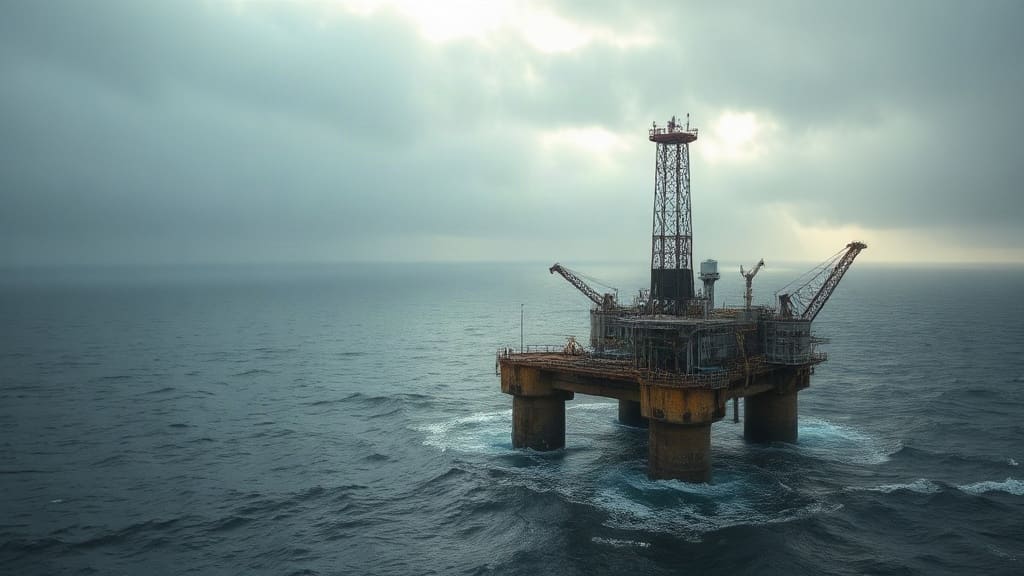
The North Sea has long been a cornerstone of Britain's energy landscape, but the aging oil fields that once powered the nation are now at the center of a heated debate. With the government nearing a pivotal decision on whether to approve new drilling licenses, the question on everyone's mind is simple: should Britain continue to extract fossil fuels from its waters, or is it time to turn the page and accelerate the transition to renewable energy? The answer is far from straightforward, as it touches on jobs, energy security, climate goals, and the very identity of a nation grappling with its industrial past and a greener future.
At the heart of the matter lies a fundamental tension. On one side, proponents of continued drilling argue that North Sea oil and gas provide essential domestic energy, reduce reliance on imports, and support thousands of skilled jobs in communities like Aberdeen. On the other side, environmental campaigners and climate scientists warn that expanding fossil fuel production is incompatible with Britain's legally binding commitment to reach net-zero carbon emissions by 2050. The decision, expected in the coming months, will send a powerful signal about the country's priorities and its willingness to lead on climate action.
The Current State of North Sea Oil and Gas
Britain's North Sea basin has been producing oil and gas since the 1970s, but the region is now considered mature, meaning that the easy-to-reach reserves have largely been depleted. What remains is often more technically challenging and expensive to extract, requiring advanced technologies and significant investment. Despite this, the basin still contributes a substantial share of the UK's energy needs, accounting for roughly half of its natural gas and a significant portion of its oil consumption.
The industry has been in gradual decline for years, with production falling from a peak of nearly 3 million barrels of oil equivalent per day in the late 1990s to around 1.5 million barrels today. Yet, recent geopolitical events, particularly the war in Ukraine and the subsequent energy crisis, have renewed interest in domestic production as a means of enhancing energy security. The government has faced pressure to boost domestic output to shield consumers from volatile global markets and reduce dependence on foreign suppliers.
The Economic Argument: Jobs and Revenue
For many communities along the North Sea coast, the oil and gas industry is not just a source of energy but a lifeline. The sector supports an estimated 200,000 jobs directly and indirectly, many of them highly skilled and well paid. Places like Aberdeen, often called the oil capital of Europe, have built their economies around the industry, and any rapid decline could have devastating social and economic consequences.
Advocates for continued drilling point to the potential loss of these jobs and the tax revenue generated by the industry. The UK government collects billions of pounds annually from oil and gas production through various taxes and levies, money that helps fund public services. In a time of economic uncertainty, walking away from this revenue stream is a difficult proposition. Moreover, they argue that a managed transition, where oil and gas production continues alongside the growth of renewables, is more realistic and less disruptive than an abrupt halt.
The Environmental Case: Climate Commitments and Risks
On the other side of the debate, environmental groups and many scientists contend that approving new drilling licenses is fundamentally at odds with the UK's climate goals. Burning fossil fuels is the primary driver of global warming, and every new barrel of oil extracted from the North Sea adds to the carbon emissions that must be reduced. The International Energy Agency has stated that no new oil and gas fields should be developed if the world is to have a chance of limiting global temperature rise to 1.5 degrees Celsius above pre-industrial levels.
Campaigners also highlight the local environmental risks associated with offshore drilling, including oil spills, disruption to marine ecosystems, and the carbon footprint of extraction operations themselves. They argue that the UK should instead invest heavily in renewable energy sources like offshore wind, where the country already leads the world, and in technologies like carbon capture and storage. Doing so, they say, would create new jobs and industries while positioning Britain as a global leader in the clean energy transition.
The Political Landscape: A Divisive Issue
The decision on North Sea drilling has become a political flashpoint. The governing Conservative Party has generally favored a cautious approach, emphasizing energy security and economic stability, while the opposition Labour Party has pledged to halt new licenses if elected, focusing instead on green investment. The Liberal Democrats and the Scottish National Party have also voiced strong opposition to new drilling, reflecting broader public concern about climate change.
Public opinion is divided. Polls show that while a majority of Britons support action on climate change, there is also significant anxiety about energy prices and the cost of living. Many voters are wary of policies that could lead to higher bills or job losses in the short term. This political calculus makes the government's decision all the more challenging, as it must balance long-term environmental commitments with immediate economic pressures.
What Happens Next? The Decision and Its Implications
The government is expected to make a decision on new licensing rounds in the near future, with some reports suggesting an announcement could come before the end of the year. The outcome will have far-reaching implications. If new licenses are granted, it could signal a continued reliance on fossil fuels and potentially undermine the UK's credibility at international climate negotiations. If they are denied, it could accelerate the decline of the North Sea industry and force a faster transition that some fear may not be smooth.
There is also a middle path: a conditional approval that ties new licenses to stricter environmental standards or requires companies to invest in emissions reduction technologies. Such an approach could offer a compromise but may satisfy neither side fully. Whatever the decision, one thing is clear: the debate over North Sea oil is about more than just energy. It is about the kind of future Britain wants to build and the trade-offs it is willing to accept along the way.
Frequently Asked Questions
Why is Britain considering new North Sea oil drilling?
Britain is considering new drilling primarily to enhance energy security, especially in light of recent global energy crises, and to protect jobs and tax revenues from the oil and gas industry. Supporters argue that domestic production reduces reliance on imports and provides a stable energy supply during the transition to renewables.
How does North Sea drilling affect the UK's climate goals?
New drilling would increase fossil fuel extraction, leading to higher carbon emissions and making it harder to meet the UK's net-zero by 2050 target. Environmental groups and climate scientists argue that expanding oil and gas production is inconsistent with the necessary rapid reduction in greenhouse gas emissions.
What are the economic impacts of stopping North Sea drilling?
Stopping drilling could lead to significant job losses in regions dependent on the oil and gas industry, such as northeast Scotland, and reduce government tax revenues. However, proponents of a rapid transition argue that investments in renewable energy can create new jobs and economic opportunities, offsetting some of these losses over time.
What alternatives to drilling is the UK exploring?
The UK is investing heavily in offshore wind, hydrogen, and carbon capture and storage technologies. The government has set ambitious targets for renewable energy expansion, aiming to quadruple offshore wind capacity by 2030. These alternatives are seen as key to achieving climate goals while maintaining energy security.
When will the final decision on North Sea drilling be made?
The timing of the final decision is uncertain, but it is expected in the coming months. The government has indicated it will consider the latest evidence and stakeholder input before announcing its position on new licensing rounds.