
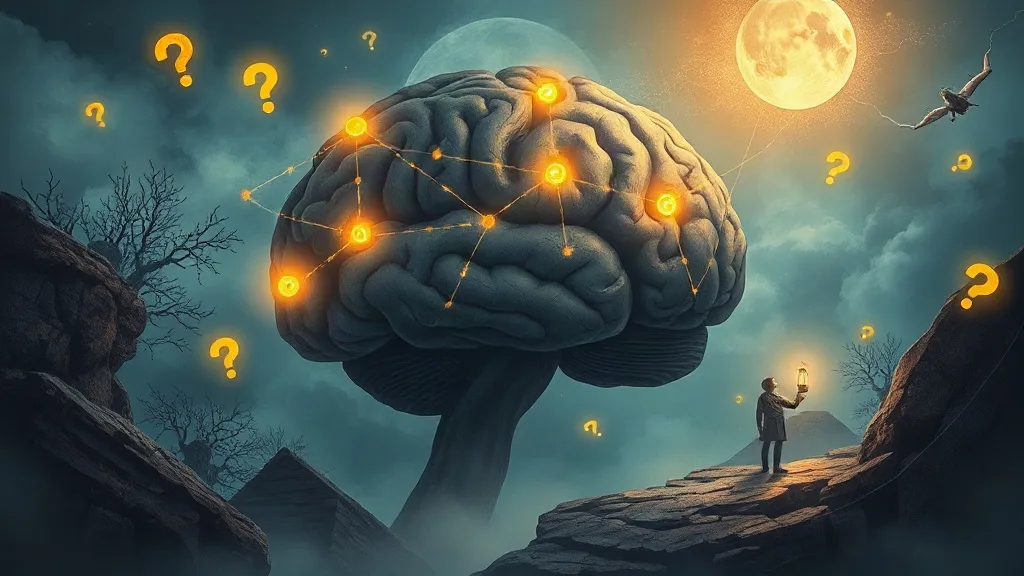
Uncertainty is a constant companion in modern life, from global crises to personal challenges. But how does the brain actually process uncertainty, and why do some people thrive while others struggle? Recent advances in neuroscience are shedding light on these questions, revealing that our ability to handle uncertainty is deeply rooted in brain function and that resilience plays a crucial role in maintaining mental health.
The Brain's Response to Uncertainty
When faced with uncertainty, the brain activates a complex network of regions. The amygdala, often associated with fear and anxiety, detects potential threats and triggers a stress response. Meanwhile, the prefrontal cortex, responsible for higher-order thinking, attempts to make sense of the situation and regulate emotions. This interplay between emotional and cognitive systems determines how we experience and react to uncertainty.
Research shows that the brain treats uncertainty as a form of information gap. It predicts what might happen based on past experiences, and when predictions fail, it signals an error. This prediction error prompts learning and adaptation, but it can also generate anxiety if the uncertainty is prolonged or intense. The brain's handling of uncertainty is thus a balancing act between vigilance and flexibility.
Why Resilience Matters
Resilience is the ability to bounce back from adversity and adapt to change. In the context of uncertainty, resilience acts as a buffer against stress and anxiety. People with higher resilience tend to perceive uncertain situations as challenges rather than threats, and they are more likely to use active coping strategies. This mindset not only reduces psychological distress but also promotes better decision-making under pressure.
Neuroscientific studies suggest that resilience is associated with efficient communication between the prefrontal cortex and the amygdala. Resilient individuals show greater activation in prefrontal regions that regulate emotion and less reactivity in the amygdala. This pattern allows them to stay calm and think clearly when faced with uncertainty. Moreover, resilience is not a fixed trait; it can be cultivated through experience and practice.
Strategies to Build Resilience
Given the importance of resilience, how can we strengthen it? Here are some evidence-based approaches:
- Cognitive reappraisal: Reframe uncertain situations as opportunities for growth rather than threats. This technique engages the prefrontal cortex and reduces amygdala reactivity.
- Mindfulness meditation: Regular practice improves emotional regulation and increases grey matter in brain regions associated with resilience.
- Social support: Connecting with others provides a sense of safety and belonging, which buffers against stress.
- Physical exercise: Exercise promotes neuroplasticity and reduces anxiety, enhancing the brain's ability to cope with uncertainty.
These strategies not only help manage immediate stress but also build long-term resilience. The science of handling uncertainty suggests that by training our brains, we can become more adaptable and less vulnerable to anxiety.
The Role of Anxiety and Stress
Anxiety and stress are natural responses to uncertainty, but when they become chronic, they can impair brain function and overall health. Chronic stress has been linked to structural changes in the brain, including shrinkage of the hippocampus and hyperactivity of the amygdala. These changes can exacerbate anxiety and make it harder to cope with uncertainty.
However, not all stress is harmful. Moderate levels of stress can enhance performance and promote resilience through a process known as stress inoculation. The key is to avoid overwhelming stress and to develop effective coping mechanisms. Understanding how the brain handles uncertainty can help individuals recognize when they need to intervene and seek support.
Practical Takeaways
To better navigate uncertainty, consider incorporating these practices into your daily life:
- Practice acceptance: Acknowledge that uncertainty is inevitable and focus on what you can control.
- Stay informed but avoid overload: Gather reliable information, but limit exposure to news that fuels anxiety.
- Develop a routine: Predictability in daily habits provides a sense of stability.
- Seek professional help if needed: Persistent anxiety may require therapeutic intervention, such as cognitive-behavioral therapy.
By understanding the brain's mechanisms and actively building resilience, we can transform uncertainty from a source of fear into an opportunity for growth.
Frequently Asked Questions
How does the brain process uncertainty?
The brain processes uncertainty by detecting prediction errors and activating regions like the amygdala and prefrontal cortex. This triggers a stress response and attempts to adapt, which can lead to anxiety if the uncertainty is prolonged.
Can resilience be learned?
Yes, resilience is not fixed. Through practices like cognitive reappraisal, mindfulness, and social support, individuals can strengthen their resilience and improve their ability to handle uncertainty.
What are the signs of low resilience?
Signs include feeling overwhelmed by change, avoiding challenges, and experiencing persistent anxiety or depression. These may indicate a need to develop coping strategies or seek professional help.
How does stress affect the brain?
Chronic stress can alter brain structure and function, particularly in the hippocampus and amygdala, leading to increased anxiety and impaired cognitive flexibility. However, moderate stress can enhance resilience through stress inoculation.
What is the role of the prefrontal cortex in uncertainty?
The prefrontal cortex helps regulate emotions and make decisions under uncertainty. It communicates with the amygdala to modulate the stress response and promote adaptive behavior.