
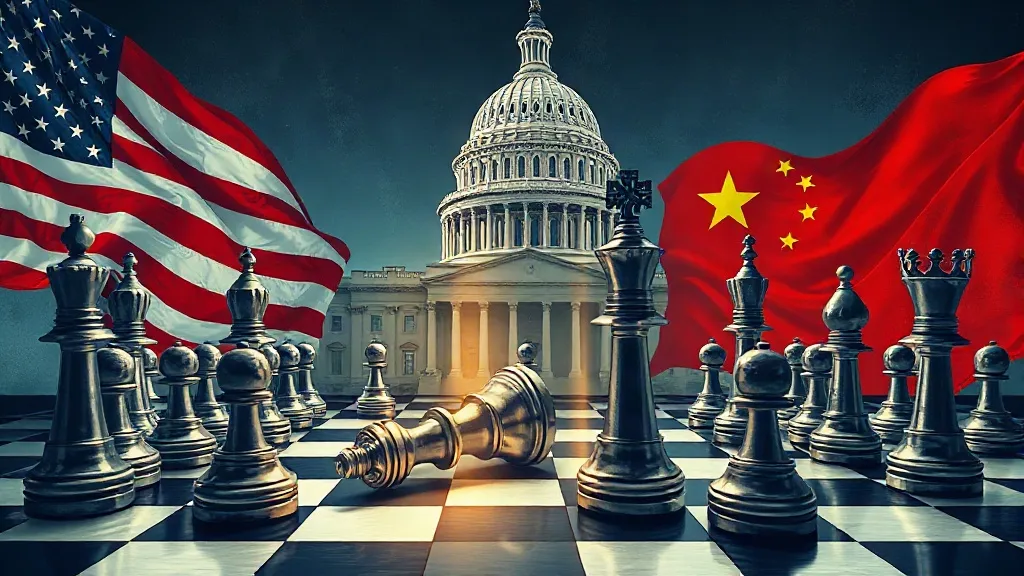
When President Trump intervened in Nvidia's board to reinstate Jensen Huang as CEO, the move was framed as a victory for American innovation. But beneath the surface, it sends a troubling signal: that national security can be bargained with, and that our adversaries are watching. This is not just a corporate governance issue; it's a geopolitical one.
The Intervention and Its Rationale
According to reports, President Trump pressured Nvidia's board to bring back Jensen Huang, the company's longtime CEO, after a brief period of uncertainty. The official rationale was to ensure stable leadership at a critical moment for the semiconductor industry, which is vital to U.S. economic and national security. Nvidia's chips power everything from artificial intelligence to military systems, and Huang's vision has been central to the company's success.
But the intervention raises eyebrows. Why would the President involve himself in the internal affairs of a private company? The answer, according to some insiders, lies in the broader tech war with China. Nvidia's dominance in AI chips is a key asset for the U.S., and the administration may fear that a leadership change could disrupt the company's strategic direction.
National Security Implications
National security is not a boardroom bargaining chip. By intervening, the President has politicized Nvidia's leadership, potentially undermining the company's independence and credibility. More importantly, it signals to adversaries like China, Russia, and Iran that the U.S. is willing to compromise its principles for short-term gains. Our adversaries will take note, and they may interpret this as weakness.
Consider the message sent to Beijing: The U.S. is so concerned about losing its tech edge that it will resort to heavy-handed tactics. This could embolden China to accelerate its own chip development and reduce reliance on American technology. Similarly, Russia and Iran may see an opportunity to exploit divisions within the U.S. tech sector.
The Price of Intervention
There is a price to pay for such interventions. First, it erodes trust in American corporate governance. Investors may worry that political considerations could override business decisions, leading to volatility. Second, it sets a precedent for future interventions, potentially turning the U.S. into a country where politics and business are inseparable. Third, it weakens the argument for free markets and fair competition, which are core to U.S. economic leadership.
Moreover, the intervention may backfire. If Nvidia's board feels undermined, it could lead to internal strife and talent drain. Huang himself may be seen as a political appointee rather than a visionary leader, tarnishing his reputation and the company's.
The Broader Tech War
This incident must be viewed in the context of the ongoing tech war between the U.S. and China. The U.S. has imposed export controls on advanced chips to China, and Nvidia has been caught in the crossfire. The administration's intervention may be an attempt to ensure Nvidia aligns with national security goals. But it's a delicate balance: too much interference could harm the very industry it seeks to protect.
Allies are also watching. Countries like Japan, South Korea, and Taiwan, which are key players in the semiconductor supply chain, may be wary of U.S. tactics. They might question whether their own companies could be subject to similar interventions, leading them to diversify away from American technology.
Conclusion: A Dangerous Precedent
President Trump's intervention in Nvidia's board is a dangerous precedent. It puts a price on national security by suggesting that it can be traded for corporate stability. Our adversaries will indeed take note, and they may use this to their advantage. The U.S. must uphold its principles of free enterprise and fair competition, even as it addresses legitimate security concerns. Otherwise, it risks losing the very edge it seeks to protect.
Frequently Asked Questions
What exactly did Trump do regarding Nvidia's board?
President Trump pressured Nvidia's board to reinstate Jensen Huang as CEO after a brief period of uncertainty, according to reports. The intervention was reportedly aimed at ensuring stable leadership amid national security concerns.
Why is this intervention controversial?
It is controversial because it involves the President meddling in private corporate governance, which could undermine the independence of the tech industry and set a precedent for political interference.
How does this affect national security?
It may weaken national security by signaling to adversaries that the U.S. is willing to compromise its principles. It could also erode trust among allies and investors, ultimately harming the U.S. tech ecosystem.
What are the potential consequences for Nvidia?
Nvidia may face internal turmoil, reputational damage, and a loss of investor confidence. The company's leadership could be seen as politically influenced, which might affect its global standing.