
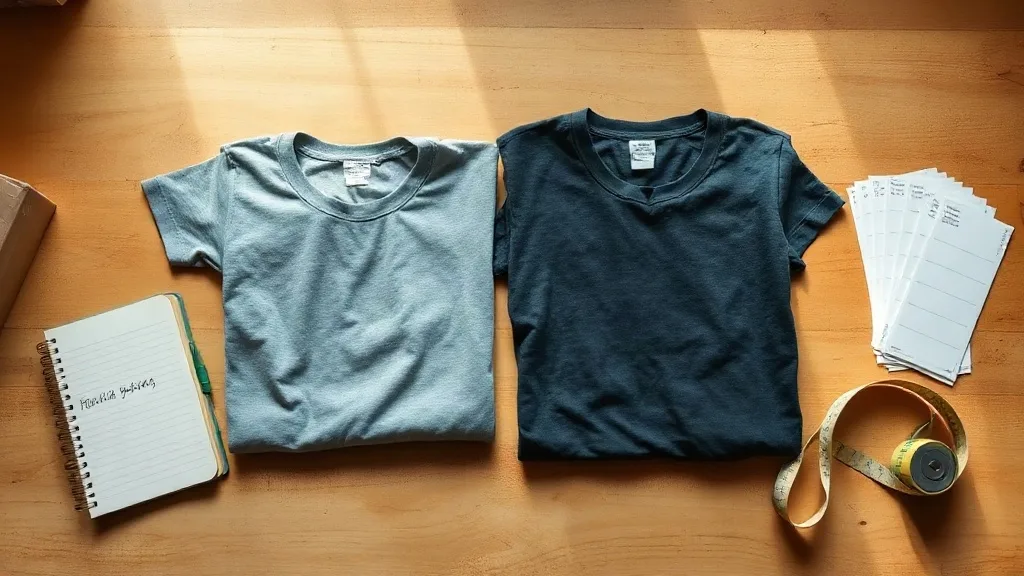
Every new apparel brand I have watched quietly fall apart did the same thing in month two: they opened a spreadsheet, typed the unit price of a blank into cell A1, multiplied it by the order quantity, and called that their cost. It looked responsible. It was also the single number most likely to sink them. The blank that costs four dollars and survives eight washes is not cheaper than the blank that costs six and survives forty. It just hides the loss in returns, restocks, and the reviews you never see because the customer did not bother writing one.
This is a piece about that second number. Specifically, it is about how smart blanks and shaka wear fit into a cost-per-wear way of thinking, and why the brands that last tend to build their whole pricing model around durability instead of the invoice total.
Why the unit price is the wrong number to obsess over
Cost per wear is a simple idea borrowed from people who buy one good coat instead of five bad ones. You take what you paid, divide it by the number of times the thing actually gets worn, and compare. A twenty-dollar tee worn twice costs ten dollars a wear. A fifty-dollar tee worn a hundred times costs fifty cents a wear. The second one is the bargain, and nobody needs a finance degree to see it.
For a print shop or a small clothing label, the same logic applies but with a twist. Your customer is not the only one doing the math. You are, too, because every blank that fails early comes back as a problem: a reprint, a refund, a message thread that eats an afternoon, a review that sits on your homepage for two years. Those costs do not show up in cell A1. They show up later, and they are usually bigger than the difference between a cheap blank and a good one.
The hidden line items nobody puts in the spreadsheet
- Reprint labor on failed garments, which is often two to three times the blank cost
- Shipping both ways on a return that should never have happened
- Time spent answering messages about shrinkage and pilling
- The customer who quietly leaves and never comes back
Add those up on even a modest order and the "cheap" blank stops looking cheap. This is the argument for paying attention to what a blank is made of, how it is cut, and how it behaves after the tenth wash.
What actually separates a good blank from a bad one
Most people assume it is cotton quality, and that is part of it. But in practice, three things decide whether a blank holds up under a heat-pressed design: fabric weight and knit density, the way the garment is cut and sewn, and how the fabric is finished before it ever reaches your press.
Weight and knit density
A lightweight jersey stretches and distorts under the pressure and heat of a transfer. The print may look fine on day one, then start to crack at the edges once the fabric relaxes. Heavier, denser knits hold their shape, which means the print holds its shape too. If you are pressing anything onto a garment, a mid-to-heavyweight cotton or a cotton-poly blend is usually the safer bet.
Cut and construction
Side seams, shoulder taping, and a proper ribbed collar are not decorative details. They are what stop a shirt from twisting in the wash. A blank with a poorly attached collar will look tired after a month, no matter how good the print is. When I check a new blank, I pull gently on the collar and the shoulder seam before I ever press it. If either gives easily, I know what is coming.
Pre-shrink and finish
Shrinkage is the quiet killer. A garment that loses a full size after the first wash turns a well-fitted design into a crop top and a customer complaint. Pre-shrunk or well-finished fabrics behave predictably, which matters enormously when you are printing in bulk and cannot inspect every unit.
Where smart blanks and shaka wear fit in
This is where the conversation gets practical. smart blanks as a category are built around exactly this idea: garments that are priced sensibly but constructed to survive real use, not just the first photo shoot. The appeal for a small brand is obvious. You get a blank that behaves well under a heat press without paying boutique prices, which means you can keep your retail price competitive and still sleep at night.
shaka wear plays in a similar space but with a streetwear lean. The cuts tend to run a little boxier, the fabrics a little heavier, and the whole line is designed for the kind of oversized, relaxed silhouettes that sell well right now. If your label is chasing that look, you are not fighting the blank to get it. The garment already does half the work.
Put the two together and you get a useful split. Use smart blanks for the core, everyday pieces where durability and price matter most. Use shaka wear for the statement pieces, the drop designs, the ones where the silhouette is part of the sell. Same press, same workflow, two different jobs.
A quick note on mixing suppliers
There is nothing wrong with sourcing from more than one place, but keep your sizing consistent. If your medium from one supplier fits like a large from another, your customers will notice and your return rate will climb. Order a sample in every size you plan to sell before you commit to a bulk run.
How to run a real cost-per-wear test on your own blanks
You do not need a lab. You need a washing machine and a little patience. Here is the routine I use whenever I am evaluating a new blank.
- Order two units in the same size and color. One is your control, the other is your test garment.
- Press your standard design onto the test garment using your normal settings. Do not change anything to make it look better.
- Wash the test garment ten times, inside out, on a normal cycle, with a normal detergent. Tumble dry on low each time.
- Compare it side by side with the control. Look at the collar, the seams, the print edges, and the overall length.
- Write down what changed and at which wash it changed. That number is your real durability figure.
Ten washes will tell you more about a blank than any product page. If the print starts lifting at wash three, you have a problem you can fix before it reaches a customer. If it still looks sharp at wash ten, you have found a blank worth building on.
The pricing side of the equation
Once you know your durability figure, the pricing conversation changes. Suppose a blank costs you six dollars and holds up for forty wears. That is fifteen cents a wear. A four-dollar blank that fails at ten wears costs forty cents a wear, plus the reprint, plus the return shipping, plus the review. The math is not close.
That does not mean you should always buy the most expensive option. It means you should buy the option that gives you the lowest cost per wear for the specific product you are selling. A promotional tee for a one-day event does not need to survive forty washes. A flagship piece that customers will wear weekly for a year absolutely does. Match the blank to the job.
Where brands usually get this wrong
The most common mistake is treating every product the same. A brand will pick one blank, use it for everything, and then wonder why their premium line feels cheap or why their entry-level line is priced too high to move. Segment your blanks by purpose. Entry-level pieces can use a lighter, cheaper construction. Hero pieces should use the best blank you can reasonably afford, because that is the garment that builds your reputation.
A few practical habits that save money over time
- Keep a small sample library of every blank you have tested, labeled with the wash count and the result.
- Photograph each test garment at wash zero, five, and ten. Photos settle arguments faster than memory.
- Order a restock of your best-selling blank before you run out, not after. Last-minute sourcing is where quality slips.
- Track returns by blank, not just by product. Patterns show up fast when you sort the data that way.
None of this is glamorous. It is the unglamorous part of running an apparel brand that actually lasts, and it is exactly the part most new labels skip.
Frequently asked questions
What does cost per wear actually mean for a print shop?
It means dividing the total cost of a garment, including the blank, the print, and any likely reprint or return costs, by the number of wears it realistically survives. It is a way to compare blanks on durability rather than sticker price.
Are smart blanks good for heat transfer printing?
Generally yes, provided you choose a mid-to-heavyweight option and follow your press settings. Lighter weights can distort under heat and pressure, so test a sample before committing to a bulk order.
How many washes should a custom printed shirt survive?
A reasonable target for everyday wear is somewhere around thirty to fifty washes with the print still intact, assuming correct application and normal care. Promotional pieces can be lower, and premium pieces should aim higher.
Should I use the same blank for every product in my line?
Usually not. Segment by purpose. Use a durable, well-priced blank for core pieces and a heavier, more characterful blank for your hero designs. This keeps your pricing sensible and your quality consistent where it matters most.
How do I test a new blank without wasting money?
Order two units, press one with your standard design, and wash it ten times alongside the untouched control. Compare them side by side. That small test costs far less than a bulk order of blanks that fail in the field.